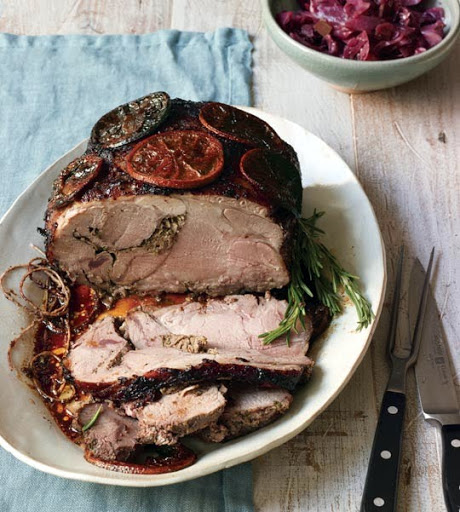
Slow-Roasted Pork with Glazed Orange Slices
By polloazul
COOK TO COOK
Why recipes still call for pork loin as a celebration roast we can't imagine. Over-priced and underperforming, the typical commercial loin comes off dry and tasteless. Much cheaper shoulder cuts, like the pork in this recipe, have the essential marbling for succulent eating, and no roast is as easy on a cook. Short of blasting (and toughening) them in too hot an oven (keep the temperature at 350°F. or lower), you can't ruin a shoulder roast.
Start the roast 3 days ahead with the seasonings.
WINE
Try a Chenin Blanc from South Africa with this dish. They tend to be more reliably dry than those from the Loire and have a bit more fruit, yet are not overtly sweet.
WORK NIGHT ENCORE
Pan-Browned Pork with Mom's Apple Sauerkraut: Slice the leftover pork roast into sticks about 3 inches long by 1 inch thick. Coat a big skillet with a thin film of olive oil, get it hot, and quickly brown the pork. Take the meat out of the pan and set aside.
Wipe out the pan, coat it with a thin film of olive oil, and heat it over medium-high heat. Brown a chopped large onion and a sprig of rosemary in it along with a cut-up large apple. Blend in 2 minced garlic cloves, several cups rinsed and drained sauerkraut, and a generous splash of white wine. Stir up the brown glaze in the pan as you cook down the wine. Blend in any pan juices left from the pork and the pork pieces. Have the dish hot and serve it with boiled potatoes or toasted, chewy dark bread.
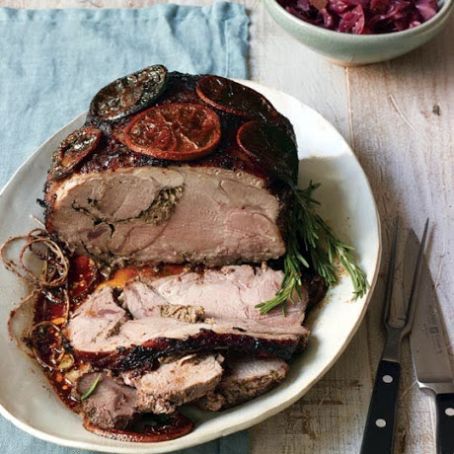 1 Picture
Ingredients
- 6 6- to 7-pound 7-pound boneless pork shoulder or Boston butt, well marbled
- 1 1 1 1 generous teaspoon whole cloves, or 1 level teaspoon ground
- 1 1 1 1 generous teaspoon whole allspice, or 1 level teaspoon ground
- 1 1 1 1 generous teaspoon coriander seed, or 1 level teaspoon ground
- 1 1 1 1 generous teaspoon black peppercorns, or 1 level teaspoon ground black pepper
- 2 1/2-inch 2 1/2-inch 2 stick, broken, or 2 teaspoons ground
- 1 1 1 tablespoon kosher salt
- 6 6 6 large garlic cloves, thinly sliced
- 1/8 1/8 1/8 cup good-tasting extra-virgin olive oil
- 1 1/8 1 1/8 1/8 cups orange juice
- 1 1/2 1 1/2 1/2 cups dry red wine
- ROASTING AND FINISHING
- 2 2 2 tightly packed tablespoons fresh rosemary leaves
- 1/2 1/2 1/2 medium onion, chopped
- 1/2 1/2 1/2 teaspoon salt
- 1 1 1 tablespoon extra-virgin olive oil
- 1 1 1 thin-skinned orange, such as Valencia, Temple, or Hamlin, unpeeled, sliced into thin rounds
Details
Servings 12
Adapted from thekitchn.com
Preparation
Step 1
1. Marinate the meat: Three days before cooking, make deep wide cuts into the meat. Then grind the whole cloves, allspice, coriander, peppercorns, and cinnamon stick in a coffee grinder or mortar and pestle, or blend the ground spices. In a medium bowl, mix the spices with the salt, garlic, oil, 2/3 cup of the orange juice, and 1/2 cup of the wine. Stuff the mixture into the slits and the meat's crevices and rub into the pork on all sides. Tuck the roast into a shallow dish, cover, and refrigerate for 3 days, turning three or four times.
2. Roast the meat: Take the meat out of the refrigerator and preheat the oven to 400°F. Purée the rosemary, onion, salt, and oil, and stuff the mixture into the roast's crevices.
3. Roll up the roast into a loose cylinder. Put it in a large shallow pan, fat side up (we like a half-sheet pan), scrape any remaining marinade over it, and scatter the orange slices around the pan. Roast for 30 minutes, then pour in the remaining 1 cup wine.
4. Turn the heat down to 325°F., pour in the remaining 2/3 cup orange juice, and roast for another 90 minutes, basting the pan juices and the orange slices over the meat several times. If the pan juices threaten to burn, blend in a little water. You want them to end up being syrupy, but not burned.
5. Test the internal temperature of the meat with an instant-read thermometer. Once it reaches 145°F. to 150°F., reduce the heat to 200°F. for another 30 minutes, or until the meat's internal temperature is 155°F. Remove the pork from the oven and let it rest in a warm place for 10 to 15 minutes before slicing.
6. The pan juices should be syrupy. If needed, set the pan over two burners, skim off a little excess fat, and cook down the juices, stirring with a wooden spatula.
7. To serve, thinly slice the pork across the grain, moistening the slices with the pan sauce and bits of roasted orange. Don't be put off if the meat is a pinkish beige; it is safe and so succulent. Serve the pork hot.
Review this recipe