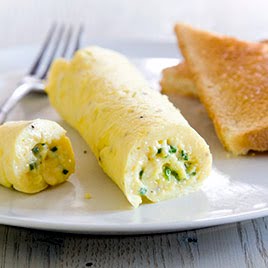
"Perfect French Omelet by CI"
By RoketJSquerl
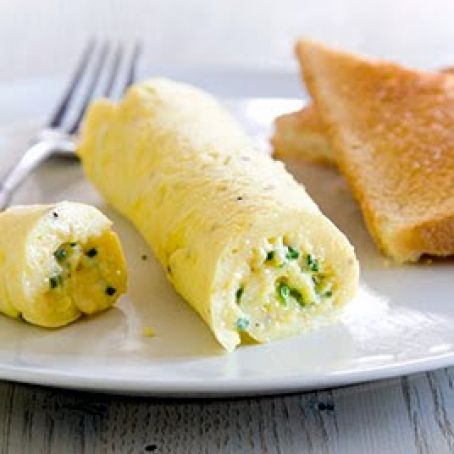
In contrast to half-moon diner-style omelets, the French omelet is a pristine rolled affair. The temperature of the pan must be just right, the eggs beaten just so, and hand movements must be swift. We decided to ditch the stuffy attitude and come up with a foolproof method for making the ideal French omelet—unblemished golden yellow with an ultra-creamy texture, rolled around minimal filling.
The classic method requires a black carbon steel omelet pan and a fork, but a nonstick skillet worked fine here. Instead of a fork, which scraped our nonstick pans, bamboo skewers and wooden chopsticks gave us small curds with a silky texture. Preheating the pan for 10 minutes over low heat eliminated any hot spots. For creaminess, we added very cold butter, which dispersed evenly and fused with the eggs for a moist, rich omelet. To keep the omelet light, we found the perfect number of strokes; excessive beating unravels egg proteins, leading to denseness. We tried different heat levels, but even at medium heat, the omelet cooked so quickly it was hard to judge when it was done, so we turned off the heat when it was still runny and covered it to finish cooking. Finally, for an easy rolling method, we slid the omelet onto a paper towel and used the towel to roll the omelet into the sought-after cylinder. (less)
Makes 2
Because making omelets is such a quick process, make sure to have all your ingredients and equipment at the ready. If you don’t have skewers or chopsticks to stir the eggs in step 3, use the handle of a wooden spoon. Warm the plates in a 200-degree oven.
 1 Picture
Ingredients
- 2 tablespoons unsalted butter , cut into 2 pieces
- 6 large eggs , cold
- Table salt and ground black pepper
- 1/2 teaspoon vegetable oil
- 2 tablespoons shredded Gruyère cheese
- 4 teaspoons minced fresh chives
Details
Adapted from americastestkitchen.com
Preparation
Step 1
1. Cut 1 tablespoon butter in half again. Cube remaining tablespoon butter into small dice, transfer to small bowl, and place in freezer while preparing eggs and skillet, at least 10 minutes. Meanwhile, place oil in 8-inch nonstick skillet and heat over low heat 10 minutes.
2. Crack 2 eggs into medium bowl and separate third egg; reserve white for another use and add yolk to bowl. Add 1/8 teaspoon salt and pinch of pepper. Break yolks with fork, then beat eggs at moderate pace, about 80 strokes, until yolks and whites are well combined. Stir in half of frozen butter cubes.
3. When skillet is fully heated, use paper towels to wipe out oil, leaving thin film on bottom and sides of skillet. Add ½ tablespoon reserved butter piece to skillet and heat until foaming subsides, 45 to 90 seconds. Swirl butter to coat skillet, add egg mixture, and increase heat to medium-high. Following photos below, use 2 chopsticks or wooden skewers to scramble eggs using quick circular motion to move around skillet, scraping cooked egg from side of skillet as you go, until eggs are almost cooked but still slightly runny, 45 to 90 seconds. Turn off heat (remove skillet from heat if using electric burner) and smooth eggs into even layer using rubber spatula. Sprinkle omelet with 1 tablespoon cheese and 2 teaspoons chives. Cover skillet with tight-fitting lid and let sit 1 minute for runnier omelet and 2 minutes for firmer omelet.
4. Heat skillet over low heat 20 seconds, uncover, and, using rubber spatula, loosen edges of omelet from skillet. Place folded square of paper towel onto warmed plate and slide omelet out of skillet onto paper towel so that omelet lies flat on plate and hangs about 1 inch off paper towel. Roll omelet into neat cylinder and set aside. Return skillet to low heat and heat 2 minutes before repeating instructions for second omelet starting with step 2. Serve.
Review this recipe