"Ragù Bolognese: Authentic Italian Bolognese Sauce
By RoketJSquerl
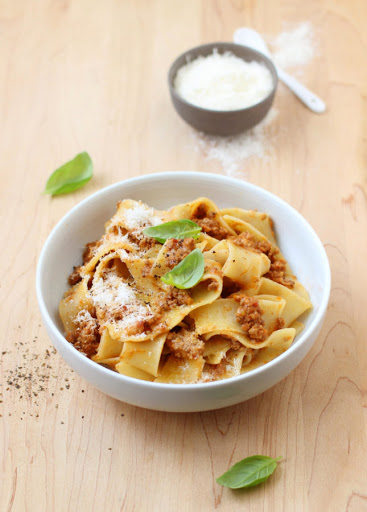
This rich authentic Bolognese Sauce is based on a registered Italian recipe for Ragù Bolognese. This meat-centric sauce is completely different from the bright red, tomato-based North American version of the sauce: it's creamy, aromatic, and surprisingly delicate in flavor.
 1 Picture
Ingredients
- 2 2 2 tbsp (30 ml) olive oil
- 1/4 1/4 1/4 cup (60 ml) butter
- 1 1 1 medium-sized yellow onion, diced
- 4 4 2 small, or 2 large, carrots, peeled and diced
- 2 2 2 celery stalks, diced
- 4 4 4 garlic cloves, minced
- 1 1 4.5 cup (250 ml) diced pancetta (about 4.5 oz/125 g)
- 1 1 1 tsp (5 ml) kosher salt, or sea salt
- Freshly ground black pepper
- 2.2 2.2 2.2 lb (1 kg) lean ground meat (beef, veal, or a combination)
- 1 1 1 cup (250 ml) dry white wine (such as Chardonnay)
- 2 2 2 cups (500 ml) whole (3.25%) or partly skimmed (2%) milk
- 1 1 1 can (28 oz/794 g) diced tomatoes, or crushed tomatoes
- 1 1 1 cup (250 ml) beef broth
- To serve
- Freshly grated Parmigiano-Reggiano
- Dried pappardelle, tagliatelle, linguine, or spaghetti
- Fresh basil (optional)
Details
Adapted from foodnouveau.com
Preparation
Step 1
METHOD
In a large pot set over medium heat, add the butter and the oil and stir until the butter is melted. Add the onion, carrot, celery, garlic, and half of the salt (½ tsp/2 ml) and sauté for 5 minutes, stirring often, until the vegetables are soft. Add the diced pancetta and cook for a further 10 minutes, until the pancetta is golden and crisp.
Add a third of the ground meat, stirring and breaking lumps with a wooden spoon between each addition. Adding the meat gradually allows the excess water and liquid to evaporate, which is key for the meat to caramelize properly. Once the meat is cooked, add a third more of the meat, stirring and breaking lumps as you go. Repeat with the remaining meat. When the meat is cooked and no lumps remain, set a timer to 10 minutes and keep cooking the meat, stirring from time to time. You want the meat to caramelize and even become crispy in spots. Golden bits of meat will stick to the bottom of the pot, which you will deglaze with white wine later. Watch over the pan at all times as you don’t want the meat to burn.
Add the white wine into the sauce pan. With a wooden spoon, scrape all the brown bits stuck to the bottom of the pot. Push the meat all around to make sure you scrape it all off. By the time you’re finished, the wine will be evaporated (2 to 3 minutes). Be careful not to let the meat stick to the pot again—lower the heat if necessary.
Add the milk, tomatoes, beef broth, remaining salt (1/2 tsp/2 ml) and a generous grinding of black pepper. Bring to a boil and then lower to the lowest heat setting. Half-cover and simmer gently for 2.5 to 3 hours, setting yourself a timer to give the sauce a stir every half hour. Start monitoring the texture of the sauce after 2 hours: the sauce is ready when it’s thick like oatmeal. It should look rich and creamy, and no liquid should separate from the sauce when you push the sauce to one side. Taste and adjust the seasoning if needed.
SLOW-COOKER INSTRUCTIONS
If making the sauce in the slow-cooker, you need to decrease the quantity of some of the liquids used in the recipe:
1 cup (250 ml) whole (3.25%) or partly skimmed (2%) milk
1 can (14 oz/398 g) diced or crushed tomatoes
½ cup (125 ml) beef broth
You also need to add the following ingredient: ¼ cup (60 ml) tomato paste. Tomato paste is required in the slow cooker method to help add body to the sauce, which won’t benefit from the same simmering and thickening process as the stovetop method.
All the remaining ingredients stay the same.
Cook the onion, carrot, celery, garlic, pancetta, and ground meat following the instructions provided above. Deglaze the pan using the white wine, as instructed, then transfer the mixture to the bowl of a slow cooker. Stir in the milk, tomatoes, beef broth, tomato paste, and some ground black pepper. (Do not add more salt at this point; wait until the end of the cooking process to taste and adjust seasoning if needed.) Cover and cook on the LOW setting for about 6 hours. If the sauce still seems soupy and runny after that period of time, keep cooking for about 2 hours, or remove the lid and simmer, uncovered, for about 30 minutes, or until you reach the desired consistency. If the sauce seems a bit dry, you can stir in a bit of beef broth to make it right. Taste the sauce and adjust seasoning if needed.
SERVING
Reheat the sauce, if needed. Add 1 generous tablespoon (15 ml) of finely grated Parmigiano-Reggiano per serving straight into the sauce, stirring to melt and incorporate the cheese. For example, if reheating enough sauce to serve 4 people, add 4 tablespoons (1/4 cup/60 ml) finely grated Parmigiano-Reggiano to the sauce. This addition will boost the flavor of the sauce and produce an incredibly creamy result. Cook the pasta of your choice according to the manufacturer’s instructions, then drain thoroughly and return to the pot. Add the sauce and stir, until tongs, to evenly distribute the sauce and coat the pasta with it. Divide between warm bowls. Garnish with fresh basil leaves, if desired, and more Parmigiano-Reggiano, to taste.
STORAGE
Let the sauce cool completely to room temperature. Divide the Bolognese Sauce into portions and store in airtight containers. Refrigerate for up to a week, or freeze for up to three months.
Review this recipe