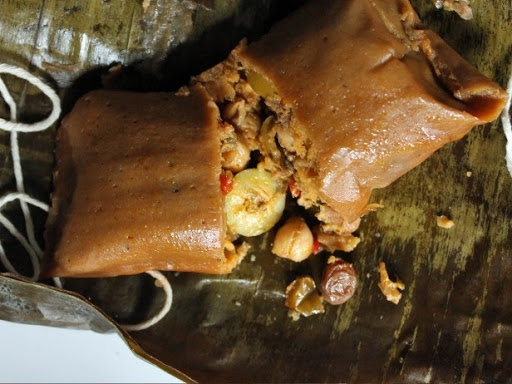
Puerto Rican Pasteles
By carvalhohm
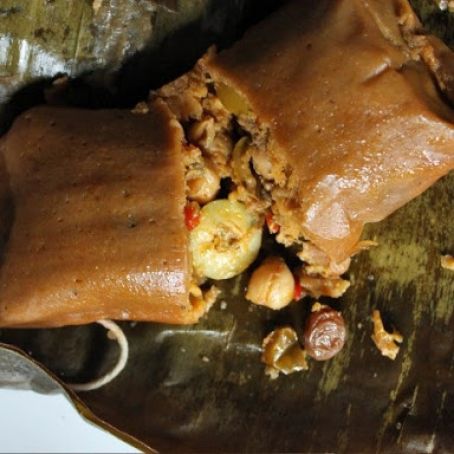 1 Picture
Ingredients
- For the achiote oil:
- 1/2 cup achiote seeds (also known as annatto)
- 1 cup extra virgin olive oil
- 1 1/2 pound boneless pork shoulder, cubed into 1-inch pieces
- 8 large garlic cloves
- 1 tablespoon dried oregano
- 1 teaspoon coarse salt
- 1/2 teaspoon freshly ground black pepper
- 1/2 cup sour orange juice (or equal parts orange juice and lime juice)
- For the sofrito:
- 1 medium Spanish onion, diced
- 1 large green bell pepper
- 5 small ajíes dulces (also known as ajicitos), seeded and diced
- 1/4 cup fresh culantro, finely chopped
- One 15-ounce can garbanzos, drained and rinsed
- 1 cup pimento-stuffed olives, sliced
- 1/2 cup raisins (optional)
- 2 tablespoons capers
- For the masa (see note):
- 2 pounds yautia (also known as malanga), peeled and cut into 1-inch chunks
- 2 pounds green (unripe) bananas, peeled and cut into 1-inch chunks
- 1 large green (unripe) plantain, peeled and cut into 1-inch chunks
- 1/4 to 1/2 cup whole milk
- 1 teaspoon kosher salt
- Two 16-ounce packages frozen plantain leaves, thawed
Details
Servings 18
Adapted from blog.cookingchanneltv.com
Preparation
Step 1
To make the achiote oil, combine the achiote seeds and oil in a small saucepan and bring to a simmer over low heat, about 5 minutes. Remove from heat and allow the seeds to steep until the oil turns a deep red color, about 10 additional minutes. Strain the oil and discard the seeds.
Place the pork in a medium mixing bowl. Using a mortar and pestle, mash the garlic cloves with oregano, salt and pepper to form a smooth paste. Stir in the sour orange juice and pour over the pork. Marinate in the refrigerator for up to 2 hours.
Heat the 1/4 cup of achiote oil in a 5- to 6-quart pressure cooker over medium-high heat. Remove the pork from the marinade and pat dry, reserving the marinade. Add the pork and saute until it is lightly browned and has rendered its fat, 3 to 4 minutes. Add the onion, green pepper, ajíes dulces and culantro, then saute until soft and translucent, about 6 to 8 minutes. Stir in the reserved marinade and cook an additional 2 minutes. Close and seal the pressure cooker and cook over medium heat for 10 minutes. Put the pressure cooker under cold running water. Do not remove the lid until the pressure comes down completely per manufacturer’s instructions. Stir in the garbanzo beans, olives, raisins (if using) and capers. Set aside the filling until ready to use.
In the meantime, prepare the masa. Working in batches, place the yautia, bananas and plantain in a food processor and pulse until smooth. Add milk as needed to form a textured puree. Transfer the puree to a large mixing bowl. Stir the salt and 6 tablespoons of achiote oil. Drain off 1/4 cup of cooking liquid from the pork filling and add to the masa.
Prepare the plantains leaves. Wipe the plantain leaves clean. Cut each leaf into a 12-by-10-inch rectangle. Place each leaf down on a worktable and lightly brush with the remaining achiote oil. Place 1/4 cup of the masa in the center of each leaf and lightly spread to form a rectangle. Top with 2 to 3 tablespoons of pork filling. Fold the bottom edge over the mixture, fold down the top half, then fold in the sides to form a packet. Tie with kitchen string. Repeat with the remaining batter and filling.
Use a tamalera or place a steamer rack in the bottom of a large stockpot and fill with enough water to reach the top of the rack. Drop a nickel into the bottom of the pot. If the water evaporates, the nickel will rattle and let you know to add more water.
Add the pasteles to the pot. Cover tightly with a lid and set to a gentle boil over medium heat until the tamales are firm, 45 to 60 minutes. The cooked pasteles should pull away easily from the wrapper.
Cooking notes: The yautia, bananas and plantain can be sliced in advance. Cover them with cold water and 1 tablespoon of lime juice to prevent discoloration. Drain well and proceed with the recipe as directed.
Pasteles are traditionally wrapped in plantain leaves, which are available at Latin American markets or in specialty food sections of larger grocery stores. If unavailable, wrap the pasteles in parchment paper, then seal in aluminum foil before steaming or boiling to prevent them from becoming waterlogged.
Review this recipe