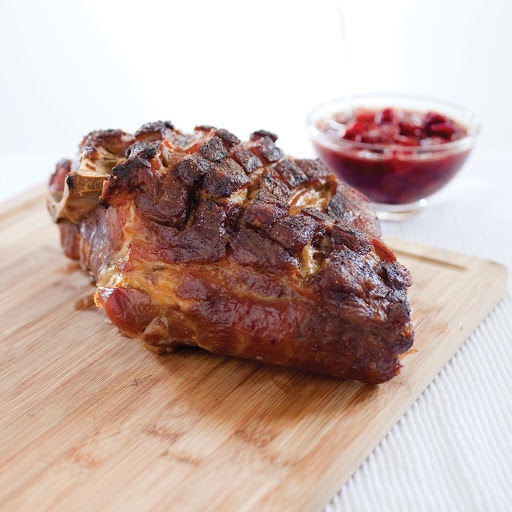
Slow-Roasted Pork Shoulder with Cherry Sauce
By Thom7747
Why This Recipe Works: Bone-in pork butt takes longer to cook than boneless but retains more moisture and cooks more evenly. We started our slow-roasted pork shoulder recipe by rubbing our roast’s exterior with brown sugar and salt, then left it to rest overnight. The sugar dried out the exterior and boosted browning. Elevating the pork shoulder on a V-rack and pouring water in the roasting pan kept the slow-roasted pork’s drippings from burning as it roasted. It also created a significant just with no burning. Finally, a fruity sauce recipe with sweet and sour elements cut the slow-roasted pork shoulder’s richness.
 1 Picture
Ingredients
- Pork Roast
- 1 bone-in pork butt, 6 to 8 pounds (see note)
- 1/3 cup kosher salt
- 1/3 cup packed light brown sugar
- ground black pepper
- Cherry Sauce
- 10 ounces fresh or frozen pitted cherries
- 2 cups red wine
- 3/4 cup granulated sugar
- 1/4 cup plus 1 tablespoon red wine vinegar
- 1/4 cup ruby port
Details
Servings 8
Adapted from americastestkitchen.com
Preparation
Step 1
NOTE FROM THE TEST KITCHEN We prefer natural to enhanced pork (pork that has been injected with a salt solution to increase moistness and flavor), though both will work in this recipe. Add more water to the roasting pan as necessary during the last hours of cooking to prevent the fond from burning. Serve the pork with the accompanying cherry sauce or peach sauce or with a sweet-tart chutney.
1. FOR THE ROAST: Using sharp knife, cut slits 1 inch apart in crosshatch pattern in fat cap of roast, being careful not to cut into meat. Combine salt and brown sugar in medium bowl. Rub salt mixture over entire pork shoulder and into slits. Wrap roast tightly in double layer of plastic wrap, place on rimmed baking sheet, and refrigerate at least 12 and up to 24 hours.
2. Adjust oven rack to lowest position and heat oven to 325 degrees. Unwrap roast and brush off any excess salt mixture from surface. Season roast with pepper. Transfer roast to V-rack coated with nonstick cooking spray set in large roasting pan and add 1 quart water to roasting pan.
3. Cook roast, basting twice during cooking, until meat is extremely tender and instant-read thermometer inserted into roast near but not touching bone registers 190 degrees, 5 to 6 hours. Transfer roast to carving board and let rest, loosely tented with foil, 1 hour. Transfer liquid in roasting pan to fat separator and let stand 5 minutes. Pour off ¼ cup jus; discard fat and reserve remaining jus for another use.
4. FOR THE SAUCE: Bring cherries, wine, granulated sugar, ¼ cup vinegar, ¼ cup defatted jus, and ruby port to simmer in small saucepan; cook, stirring occasionally, until reduced to 1½ cups, about 30 minutes. Stir in remaining tablespoon vinegar. Cover and keep warm.
5. Using sharp paring knife, cut around inverted T-shaped bone until it can be pulled free from roast (use clean kitchen towel to grasp bone). Using serrated knife, slice roast. Serve, passing sauce separately.
TECHNIQUES:
Bone-In Pork Butt: Fatty, Moist, Flavorful Instead of the lean, center-cut loin, our choice for roasting is pork butt (also known as Boston butt). This shoulder roast packs plenty of intramuscular fat that melts and bastes the meat during cooking, and it’s available with or without the bone. We prefer bone-in for two reasons: First, bone conducts heat poorly and, in effect, acts as an insulator against heat. This means that the meat surrounding it stays cooler and the roast cooks at a slower, gentler pace. Second, bones have a large percentage of the meat’s connective tissue attached to them, which eventually breaks down to gelatin and helps the roast retain moisture.
Review this recipe