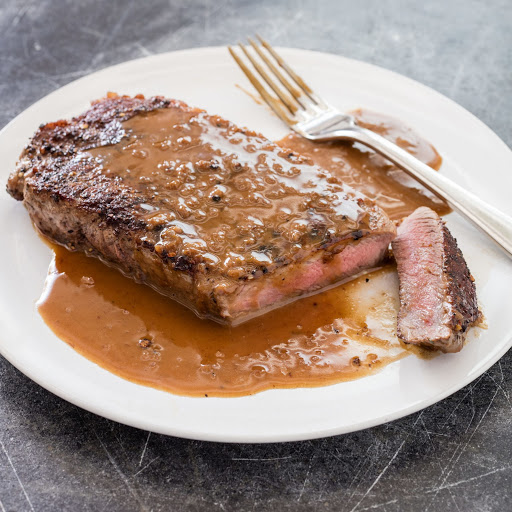
Steak au Poivre with Brandied Cream Sauce
By Thom7747
Why This Recipe Works: Our steak au Poivre recipe had to be comparable to the best bistro examples—seared and encrusted with peppercorns and adorned with a silky, fragrant sauce— without ruining a pan and without our having to make veal stock to get a decent pan sauce. For our steak au Poivre recipe, we peppered only one side of the steak to prevent scorched peppercorns and to create a nice sear and made a reduction of canned chicken and beef broths to create a quick, flavorful pan sauce.
 1 Picture
Ingredients
- Sauce
- 4 tablespoons unsalted butter
- 1 medium shallot, minced
- 1 cup low-sodium beef broth
- 3/4 cup low-sodium chicken broth
- 1/4 cup heavy cream
- 1/4 cup brandy
- 1 tablespoon brandy
- 1 teaspoon lemon juice, or 1 teaspoon champagne vinegar
- Table salt
- Steaks
- 4 strip steaks, (8 to 10 ounces each), 3/4 to 1-inch-thick and no larger than 3 inches at widest points, trimmed of exterior gristle
- Table salt
- 1 tablespoon black peppercorns, crushed
Details
Servings 4
Adapted from americastestkitchen.com
Preparation
Step 1
NOTE FROM THE TEST KITCHEN: To save time, crush the peppercorns and trim the steaks while the broth mixture simmers. Many pepper mills do not have a sufficiently coarse setting. In that case, crush peppercorns with a sauté pan or rolling pin, (see below).
1. Heat 1 tablespoon butter in 12-inch heavy-bottomed skillet over medium heat; when foaming subsides, add shallot and cook, stirring occasionally, until softened, about 2 minutes. Add beef and chicken broths, increase heat to high, and boil until reduced to about 1/2 cup, about 8 minutes. Set reduced broth mixture aside. Rinse and wipe out skillet.
2. Meanwhile, sprinkle both sides of steaks with salt; rub one side of each steak with 1 teaspoon crushed peppercorns, and, using fingers, press peppercorns into steaks to make them adhere.
3. Place now-empty skillet over medium heat until hot, about 4 minutes. Lay steaks unpeppered-side down in hot skillet, increase heat to medium-high, firmly press down on steaks with bottom of cake pan (see illustration below), and cook steaks without moving them until well-browned, about 6 minutes. Using tongs, flip steaks, firmly press down on steaks with bottom of cake pan, and cook on peppered side, about 3 minutes longer for rare, about 4 minutes longer for medium-rare, or about 5 minutes longer for medium. Transfer steaks to large plate and tent loosely with foil to keep warm.
4. Pour reduced broth, cream, and ¼ cup brandy into now-empty skillet; increase heat to high and bring to boil, scraping pan bottom with wooden spoon to loosen browned bits. Simmer until deep golden brown and thick enough to heavily coat back of metal tablespoon or soup spoon, about 5 minutes. Off heat, whisk in remaining 3 tablespoons butter, remaining 1 tablespoon brandy, lemon juice or vinegar, and any accumulated meat juices. Adjust seasonings with salt.
5. Set steaks on individual dinner plates, spoon portion of sauce over steaks, and serve immediately.
TECHNIQUES
Steak: When Is It Done?
A great steak starts at the supermarket and ends with proper timing in the kitchen. Chefs who cook hundreds of steaks a week seem to know when a steak is done almost by intuition. Here are some of the more intriguing methods of determining doneness and our assessment of their practicality for home cooks.
TRIED AND TRUE: Take the temperature. Hold the steak aloft with a pair of tongs and slide an instant-read thermometer through the side, making sure to avoid bone. The temperature should read 120 degrees for rare, 125 degrees for medium-rare, and 135 to 140 degrees for medium.
OUR ASSESSMENT: The most reliable method. Works the first time you try it--and every time thereafter.
THUMBS DOWN: Press the meat. Rare meat feels like the flesh between your thumb and forefinger. For medium meat, make a fist and touch the same part of your hand. Well-done meat feels like the tip of your nose.
OUR ASSESSMENT: This method is too vague for most cooks.
LAST RESORT: Nick and peek. Slice into the steak with a paring knife and check the color.
OUR ASSESSMENT: The steak has already been butchered once--why do it a second time in the pan and risk losing juices? Fine in an emergency, but not our first choice.
Crushing Peppercorns: Sauté Pan: Chefs frequently use the back of a heavy pan and a rocking motion to grind peppercorns.
Rolling Pin: Spread the peppercorns in an even layer in a zipper-lock plastic bag and whack them with a rolling pin or meat pounder.
Adhering the Pepper: Pressing the steaks with a cake pan or flat pot lid promotes browning and ensures that the peppercorns adhere.
Review this recipe