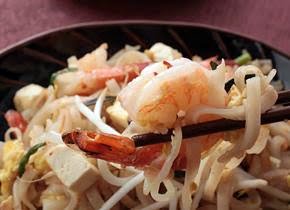
Pad Thai Recipe
By jennKI
Served at street stalls, pad thai is the iconic dish of Thailand. Noodles and stir-frying were brought over from China and combined with the four flavors of Thai cooking: salty, sweet, sour, and spicy. Pad thai is an easy but fast-moving dish, so have everything chopped and ready to go before you begin. Ingredients like palm sugar, tamarind pulp, and fish sauce might scare people away, but don’t let them—they’re sold at most Asian grocers, and they make this dish as authentic as it comes.
*Special equipment:*
Nonstick tongs, chopsticks, or two wooden spoons are useful for tossing the ingredients together to finish—metal utensils can scratch your pan.
 1 Picture
Ingredients
- 7 ounces medium dried rice stick noodles
- 5 tablespoons water
- 2 tablespoons tamarind paste or pulp (about 1 ounce)
- 2 tablespoons fish sauce
- 2 tablespoons finely chopped palm sugar (packed light brown sugar can be substituted)
- 12 large shrimp, peeled, deveined, tails left on
- 3 tablespoons vegetable oil
- Salt
- 1 cup extra-firm tofu (about 5 ounces), 1/2-inch dice
- 2 medium garlic cloves, minced
- 10 Chinese chives, cut into 1-inch pieces
- 1 tablespoon finely chopped dried shrimp
- 1 tablespoon finely chopped preserved radish
- 1 to 3 dried Thai chiles, finely chopped (or 1/2 to 1 teaspoon red pepper flakes)
- 1 1/2 cups bean sprouts (about 3 ounces)
- 2 large eggs, lightly beaten
- 2 tablespoons finely chopped roasted, salted peanuts
- 1 lime, quartered
Details
Servings 2
Adapted from chow.com
Preparation
Step 1
TIME
Total: 45 mins
Active: 20 mins
Bring a large saucepan of water to a boil over high heat. Remove from heat, add noodles, and stir briefly to separate noodles. Soak until loose and pliable, about 5 minutes. Drain and set aside.
Meanwhile, place 5 tablespoons water and tamarind in a small bowl and stir to combine, pressing on the paste to break it up. Let sit until softened, about 8 minutes. Strain mixture through a fine-mesh strainer into another small bowl, pressing on the solids to extract all the juice. Discard the solids. Add fish sauce and palm sugar and stir to combine; set aside.
Cut each shrimp along its back without cutting completely through, so it opens like a butterfly; set aside.
Heat 1 1/2 tablespoons of the oil in a wok or large nonstick frying pan over medium-high heat until shimmering. Add shrimp, season with salt, and stir-fry, tossing continually until shrimp are pink and just cooked through, about 3 minutes. Transfer to a plate and set aside.
Place remaining 1 1/2 tablespoons oil in the wok, add tofu, season with salt, and stir-fry until tofu starts to brown, about 1 minute. Transfer to the plate with the shrimp and set aside.
Add garlic to the wok and stir-fry for a few seconds. Add reserved noodles and half of the chives and stir-fry for a few seconds more. Pour in reserved tamarind mixture, stir to combine, then add dried shrimp, radish, chiles, and half of the bean sprouts. Stir-fry until noodles are coated with sauce, about 1 to 2 minutes.
Push noodles to the side of the wok, pour eggs into the free space, and scramble with a rubber spatula until almost cooked through, about 1 minute. Add reserved shrimp and tofu and remaining chives and toss all ingredients together until combined, about 1 minute. Transfer to a serving platter and garnish with remaining bean sprouts, peanuts, and lime wedges.
*COMMENTS:*
Preserved radish: Daikon radish that is pickled and salted, sometimes with chiles; it is sold either in long strips or smaller pieces. Preserved radish adds a tangy, apricotlike flavor to dishes like pad thai. Look for the word sweetened on the package or for sugar in the ingredients, as there is a similar product that is salted only. Preserved radish can be found in the dried goods or refrigerated section of many Asian markets.
Review this recipe