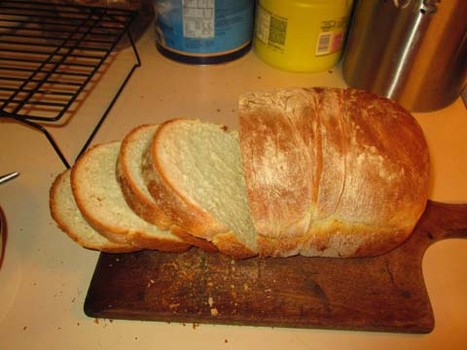
High Altitude White Bread Loaf
By stancec44
 1 Picture
Ingredients
- 6 Cups Bread Flour
- 3 Tablespoons Sugar
- 1 Tablespoon Salt
- 2 Tablespoons Vegetable Shortening
- 2 Cups very warm, but not hot, Water
- 1 1/2 Tablespoons Quick Dry Active Yeast
Details
Adapted from examiner.com
Preparation
Step 1
In a bowl, add 4 cups of flour, the sugar, the salt, and the shortening. In another bowl, add the yeast to the warm water and stir until most of it is dissolved. Add the water/yeast mix to the other ingredients; stir until all ingredients are fully mixed.
Put another cup of flour onto a dry flat surface – a table or counter. Turn the dough mix out onto the flour, and knead for 10 minutes or until the dough feels elastic and smooth. This step is important – when you first start kneading the dough, it will feel a bit lumpy and sticky. The kneading will incorporate more of the flour and smooth out all lump and air bubbles. If you use up all the flour on the counter or table surface and the dough is still sticky and lumpy, add some more flour to the surface and keep kneading. (For proper kneading technique, see the attached video!)
Once the dough is fully kneaded, place it in a clean greased bowl and cover with a clean, warm, damp dishtowel and set it aside to rise. Dough is risen when it is double or slightly more than the ball of dough you placed in the bowl.
Once the dough is risen, you must now “punch it down”. To do so, make your hand into a fist and lightly punch it into the middle of the dough. Continue until it is more than what was originally placed in the bowl, but nowhere near as high when originally risen.
Turn the dough out onto a floured surface. (If you have nothing else to do with that surface while the dough is rising, you can leave the flour from the kneading on the surface and add more if needed.)
Using a sharp knife, cut your dough ball in half, setting half aside for a second loaf.
Pull the dough a bit to get it into a uniform shape, and using a rolling pin, roll it out flat to about ½ inch in thickness. Try to roll it into a rectangular shape – if it isn’t quite there, do not hesitate to pull the dough until it is that shape.
Starting at one narrowing end, start rolling the dough up as tightly as you can manage. When you have about an inch left to roll up, put water on that end and finish rolling. Set on the counter with the seam side down. Your ends at this point will be uneven; pull the dough from the final roll around over the ends and tuck into place. Put the loaf into a greased bread pan to rise. Repeat with the other half of the dough.
Put the pans in a warm place to rise; cover with a warm damp towel until almost double the size put in the pan. With this part, you must be careful – the dough will rise even more while baking, and if you allow it to rise too high, it will end up being a very airy and crumbly loaf.
Once risen, place the pans into a preheated oven – 425 degrees – and bake until the bread is golden and makes a hollow sound when you knock on it. This should take about 25- 35 minutes, but check it at 20 minutes just in case.
Remove from the oven and immediately turn the loaves out of the pans and onto a cooling rack. As it cools, the top of the loaf that was hard at baking will soften a bit; this is not usually a crispy loaf.
This same recipe can be used to make rolls; when you turn the dough out of the bowl, cut off pieces of it about the size you would like the rolls to be. This part is something you will learn as you make them. Take the dough and pull all the edges underneath and together, giving a small twist to hold them together. Place this side down on a baking sheet. Bake at 425 degrees for about 10 minutes; use the same criteria for baking that you would the bread. To make a decorative roll, use a sharp knife to cut a cross or design on the top of the dough ball as it sits on the baking sheet.
This recipe also makes a really good pizza crust!
Review this recipe