
Char Kuey Teow | Lucky Peach
By johnwhorfin
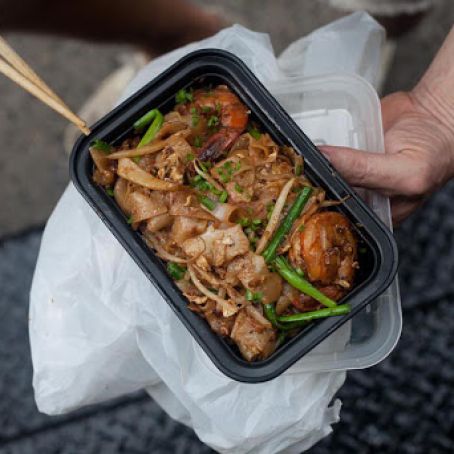 1 Picture
Ingredients
- 1 1/2 t belacan (shrimp paste)
- 3 dried red chilies
- 1 shallot, coarsely chopped
- 2 T sweet (dark) soy sauce
- 1 T + 1 t soy sauce
- 1 t fish sauce
- 3 t + 1/2 t sugar
- 8 prawns, peeled and deveined
- 1/2 t white pepper
- 3 T lard
- 3 cloves garlic, coarsely chopped
- 1 1/2 Chinese sausages (lap cheong), sliced thin
- 3 oz smoked oysters, finely diced
- 2 C mung bean sprouts
- 1 lb fresh flat rice noodles
- 2 eggs
- 8 Chinese chives, cut into 2-inch pieces
Details
Servings 2
Adapted from luckypeach.com
Preparation
Step 1
Say you’re looking for the best food in Malaysia, and tell any Malaysian so: eighty ringgit says he or she’ll take you straight to a hawker center—an unglamorous, open-air food court where Indian, Chinese, and Malay cooks sling their best. Other givens: no air conditioning, roaming strays, ladies asquat washing dishes in plastic tubs. But the grunginess just means folks care more about the food than about keeping you comfortable.
The bread and butter of every Malaysian hawker center is noodles—brought to you by Chinese people. It was Chinese cooks who first introduced stir-frying and wok cooking to Malaysia, where cooking tended to be simmered and slower. Char kuey teow is the star of the hawker-noodle show. It was a creation of the Teochew, an ethnic group from Chaoshan in Southern China, who immigrated to Malaysia starting in the nineteenth century and formed communities by the water, in Province Wellesley and Kedah. Kuey teow—in Teochew—means “rice strips,” and char means “fried.”
Rice was abundant back home in Chaoshan, which is why Teochew noodles are made from rice sheets that have been steamed and cut into strips. Teochew fishermen and women used to hawk these rice strips, fried together with their day’s catch, at night for extra cash. This was food for poor, hungry Chinese laborers who fished, mined, and farmed, so: heaps of noodles, random proteins, cooked in lard.
Makes 2 servings
Wrap the shrimp paste in a small packet of aluminum foil. Using tongs, hold it over a gas flame for about 30 seconds on each side. It will smell terrible, like burning hair.
Make the chili paste: soak the dried chilies in warm water for 20 minutes. Drain and blend with the shallots and shrimp paste, using a food processor or mortar and pestle, or whatever it takes to get the shallot broken down and pulpy. In a separate bowl, mix together the sweet soy sauce, 1 tablespoon of regular soy sauce, and fish sauce, then dissolve the 3 teaspoons of sugar in it.
In a well-seasoned wok or large nonstick pan, heat 1 tablespoon of lard over medium heat. Add the chili paste (it should hiss when it hits the pan) and sauté until fragrant, about 1 minute. Scrape the chili paste out and set aside.
Spoon the remaining 2 tablespoons of lard into the pan and crank the heat to high. Add the garlic, cook until fragrant and gold around the edges—about a minute—then plop the chili paste back in and stir it into the garlic.
Add the shrimp and sausage. When the shrimp curl into themselves and turn pink and firm, add the oysters and bean sprouts.
Make a clearing for the eggs and slide them onto the pan, scrambling them to the point of being just barely set, then incorporate them into the noodles.
Throw the chives in and stir for another 30 seconds. Dispense and eat immediately. It’s best served on a banana leaf, eaten with plastic chopsticks, while sitting on a stool in a dirty alleyway.
Review this recipe