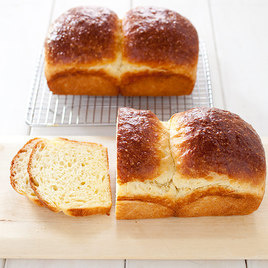
No-Knead Brioche
By DreiFromBK
Instead of painstakingly adding softened butter to the dough while it is kneaded, we simply melted the butter and added it directly to the eggs. We dispensed with the stand mixer altogether and opted for an equally effective no-knead approach that lets time do most of the work. To build structure and ensure an even, fine crumb in the finished loaf, we divided the dough and shaped it into tight balls before placing them in the pans.
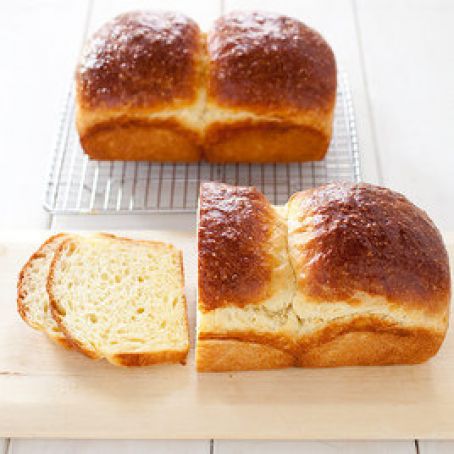 1 Picture
Ingredients
- Makes 2 Loaves
- High-protein King Arthur Bread Flour works best with this recipe, though other bread flours will suffice. If you don’t have a baking stone, bake the bread on a preheated rimmed baking sheet.
- Dough
- 3 3/4 cups (18 3/4 ounces) unbleached all-purpose flour, plus more for shaping
- 1 envelope (2 1/4 teaspoons) rapid-rise yeast
- 1 1/2 teaspoons table salt
- 6 large eggs, at room temperature
- 1/2 cup water, at room temperature
- 6 tablespoons granulated sugar
- 2 sticks (8 ounces) unsalted butter, melted and cooled slightly, plus soft butter for the rising bowl.
- Glaze
- 1 egg yolk beaten with 1/8 teaspoon salt
Details
Adapted from americastestkitchen.com
Preparation
Step 1
If not weighing, measure the flour by the dip and sweep method. In a large bowl, whisk together the flour, yeast, and salt. Whisk the eggs until well-combined in a medium bowl; whisk in the water and sugar until sugar has dissolved. Lastly, whisk in butter until smooth. Add the liquid to the dry ingredients and stir with a wooden spoon until smooth. Make sure all the flour has been incorporated. Dough will be wet. Cover the bowl tightly with plastic wrap and let the dough rest for 10 minutes.
Lift an edge of the dough with your fingertips (flour them if necessary), and fold it over itself toward the center of the dough. Turn the bowl slightly and fold again. Repeat 6 more times for a total of 8 folds. Cover tightly with plastic wrap and let rest at room temperature for 30 minutes. Repeat the folding and resting every 30 minutes, 2 more times. After the third set of folds, shape the dough into a ball and place it in a buttered 4-quart casserole or other similar pot. Cover and refrigerate for 24 to 48 hours. (I find the longer rise makes for a more delicate brioche).
Transfer the chilled dough to a well-floured counter and flatten it into an 8-inch disk. Working from the outer edges of the dough, fold sections of dough toward the center until a ball forms. This is the underside of the dough and it will not look smooth. Turn the dough over (smooth side up) and gently cup your hands around the ball. Move your hands in small circular motions to form a smooth, taut round. Pinch the underside of the dough so that any ragged pieces come together and replace the dough seam side down in the pot. Cover with the pot lid and let rise in a warm place until the dough is almost tripled in volume, about 2 hours.
About thirty minutes before baking, adjust an oven rack to the lower third position, and preheat the oven to 350 degrees. When the brioche is fully risen, brush it gently with the egg yolk glaze, making sure the glaze does not run between the brioche and the pan, which could hinder the loaf’s rise.
Bake the brioche, uncovered for about 50 minutes (sometimes longer), until well-browned and an instant-read thermometer registers an internal temperature of 195 to 200 degrees. Remove from pan and cool completely on a wire rack before slicing and serving, about 2 hours.
Makes 1 large round loaf.
Review this recipe