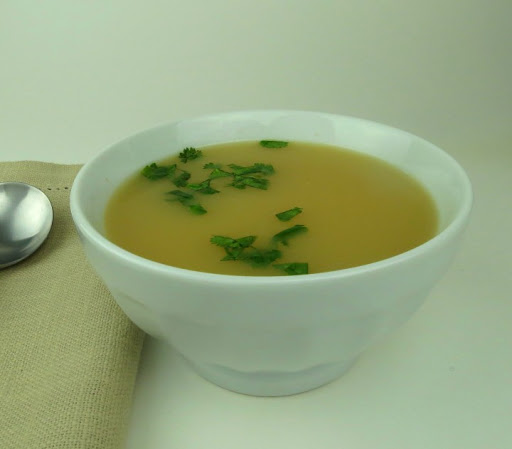
Easy Pressure-Cooker Bone Broth
By Bailey1_
I recently discovered the easiest way to make bone broth! Pressure cooker bone broth takes just 2.5 – 3 hours, instead of 12 – 24 hours in a regular pot. Pressure cookers are safe, simple to use, and can make meals taste like you spent all day over the stove. The tight seal on a pressure cooker allows the boiling point of liquid
My favorite pressure cooker is the Fissler Vitaquick 8½-Quart Pressure Cooker (8 liters). This is a nice big pot, so you can make 1 1/2 gallons of broth and freeze. Solidly constructed in Germany, this well-engineered cooker has an automatic lock and an easy-to-monitor pressure valve. The great benefit is that this cooker can reach 250 degrees at high pressure, higher than most others.
I could write pages about the benefits of bone broth. Rich marrow in the long bones helps the red blood cells transport oxygen, the #1 essential for cellular health. Marrow promotes healthy white blood cells for a strong immune system. Beef knuckles, chicken feet, and ribs are rich in cartilage, which helps rebuild healthy bones, joints, intestines, and strengthens the immune system. Collagen, or gelatin increases the ability to assimilate a variety of proteins. It forms strong bones, cartilage, and mucus membranes throughout the body. It speeds healing of soft tissue and wounds, preventing bruising and bleeding gums. Most importantly for people with gastro-intestinal issues, collagen or gelatin can help heal the mucus membranes of the gastrointestinal tract. For this reason bone broth is critically important to gluten-intolerant folks, because of its ability to heal the lining of the digestive tract. This makes it a key to other inflammatory conditions such as irritable bowel and “leaky gut syndrome”, which often go hand-in-hand with gluten reactions.
I like to freeze the broth in small BPA-free containers, and use as needed. Or freeze it in ice cube trays. Add the broth to soups, risottos, and stir-fries. Enjoy a cup of hot broth as a pick-me-up instead of coffee or tea. Take it in a thermos, or use broth in place of water in any savory recipe. You’ll need a pressure cooker, another large soup pot, and a large colander or strainer. Yield: 1 1/2 gallons broth.
 1 Picture
Ingredients
- 1 - 2 lbs. beef tail bones – grass-fed, grass-finished
- 1 lb. organic chicken feet, or backs & necks
- 2 lbs. beef long bones or knuckles, sliced crossways
- 2 carrots, scrubbed and coarsely cut
- 2 stalks celery, washed and coarsely cut
- 1 onion, peeled and cut in half
- 3 cloves garlic, smashed
- 1 teaspoon black peppercorns
- 1 – 2 tablespoons apple cider vinegar
- 3 bay leaves
- 2 teaspoons unprocessed salt
- parsley 1/2 bunch
- 1 gallon filtered water or more to fill pressure-cooker 3/4 full.
Details
Servings 1
Adapted from janeshealthykitchen.com
Preparation
Step 1
2 carrots, scrubbed and coarsely cut
2 stalks celery, washed and coarsely cut
1 onion, peeled and cut in half
Put the ingredients in the pressure-cooker and add filtered water. Heat on high with the lid open until it barely begins to boil.
Just before it goes into a full rolling boil, turn the heat down. Use a large flat spoon to remove the surface foam. Called “schiuma” in Italian, this contains impurities, and is best removed to make your broth pure and clear. The foam is removed before it goes to a full rolling boil, otherwise it will go back into the broth.
Cover and lock the lid tightly. Keep the flame high until you see the pressure indicator on the lid indicate it has reached desired level. Then turn down the flame and allow the pot to do its work - 2.5 to 3 hours. Watch the indicator and adjust accordingly to maintain high pressure. After 3 hours, turn off the flame and allow the pot to cool. This can be overnight. When you open the pot, the broth will be rich and flavorful. The bones will be disintegrating. Strain it into another pot.
Spoon the gelatinous broth into storage containers. Or freeze in BPA-free ice-cube trays, and then store the cubes in plastic freezer bags. Frozen broth cubes can be used in a hundred ways, in any savory dish just as you’d use water. Maybe you deserve a delicious bowl of hot broth right now!
Review this recipe