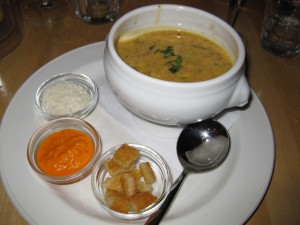
Stephen Markwick’s Provençal Fish Soup
By CheeseDiva
 1 Picture
Ingredients
- 1 kg (2lb 4 oz) fish heads, bones and trimmings (see above)
- 1 onion
- 1 leek, trimmed and washed
- A stick of celery
- Any fennel trimmings
- Parsley stalks
- 2 tbsp olive oil and a good knob of butter
- A few black peppercorns
- A couple of bay leaves
Details
Servings 4
Adapted from campaignforrealfarming.org
Preparation
Step 1
The key thing is to get the right kind of bones – you don’t want bones from oily fish like mackerel and even plaice will make a stock taste bitter. I also don’t use shellfish trimmings as so many people can’t eat shellfish. The best bones to use are from prime white fish like turbot, halibut, sole and John Dory – the better the fish the better the stock.”
Actually I don’t find making fish stock much of a chore. Unlike meat stock it mustn’t cook for too long or the bones will become gluey and bitter, so 20 minutes is all you need. For this reason I have used fish to teach stock making principles in my cookery classes where the time is too limited for the long simmering required to make meat stock.
Remove the gills from any fish heads (insert your fingers behind the gill, twist and pull or simply cut out with scissors). Wash the bones several times to get rid of the blood (otherwise it will make the stock cloudy).
Cut up the vegetables roughly. Pour the oil in a large pan, add the butter and cook the vegetables and bones over a low heat until the bones start to go opaque. Add the peppercorns and bay leaves, cover with cold water – and a little white wine if you have some. Bring to the boil, skim and then turn the heat down to the lowest setting you can for just 15-20 minutes then strain.
225g (8 oz) smoked haddock fillet, skinned and boned
Cut the vegetables into smallish dice, add the ground spices and season with salt and pepper. Heat the olive oil in a large pan and fry the vegetables until beginning to soften then add the smoked haddock and fry another couple of minutes. Add the chopped tinned tomatoes and white wine and simmer for about 10 minutes before adding the fish stock. Bring back up to simmering point and continue to cook on a low heat for another half an hour.
Finally check the seasoning and stir in the chopped herbs, saffron and lemon juice (unless you are going to freeze the soup, in which case don’t add the herbs and lemon juice until you heat it up).
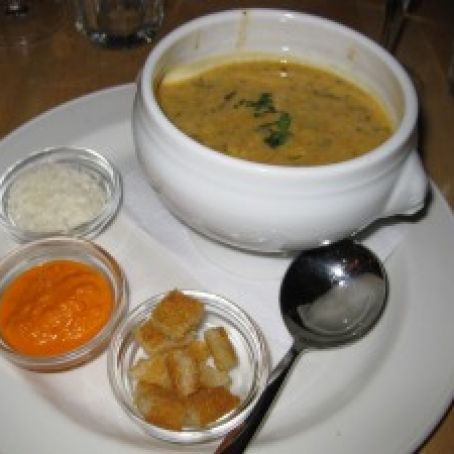
Take the soup off the heat and whisk in the aioli to taste (about a tablespoon per portion). Make sure you do this off the heat or the aioli will split. Just before serving you can add some bits and pieces of whole fish for extra texture. I use the off-cuts of any fish we have on the menu but you could use a chopped up salmon fillet or a few prawns it you eat shellfish. Sprinkle with chopped parsley and serve with pots of rouille, garlic croutons and grated parmesan.
You can make this in a food processor but if you have a decent sized mortar and pestle it’s just as easy, and more satisfying, to do by hand. I also think the texture and taste are far better. It’s easy to “over-process”aioli or mayonnaise in a blender, which can cause it to separate when added to the soup. The crucial thing is to have all the ingredients at room temperature.”
Put the garlic into a mortar with the salt and pound until you have a smooth paste. Work in the egg yolk. Pour the two oils into a jug and then gradually drip the olive oil, drop by drop, into the egg and garlic mixture whisking continuously as you do so. Keep on adding oil very slowly until the mixture begins to stiffen then increase the speed you add the oil to a steady fine stream. Once all the oil has been incorporated add a little warm water, half a teaspoon at a time, to lighten and loosen the mixture. For fish soup I add a bit more water so that it amalgamates smoothly and doesn’t break up into globules or curdle.
This is really easy. Put all the ingredients in a liquidiser goblet and blitz until smooth. Check seasoning, adding a little extra salt or ground chilli if you think it needs it.
A good way of using up old bread. Cut into medium thick slices and shallow fry them in a mixture of olive oil and sunflower oil until crisp and golden. Remove the pan and whilst they’re still hot rub with a cut clove of garlic then cut them into cubes. Put them in a cool oven to finish crisping up or cool and store in an airtight tine – refresh in the oven or a dry pan just before using them.
Your email address will not be published. Required fields are marked
Review this recipe