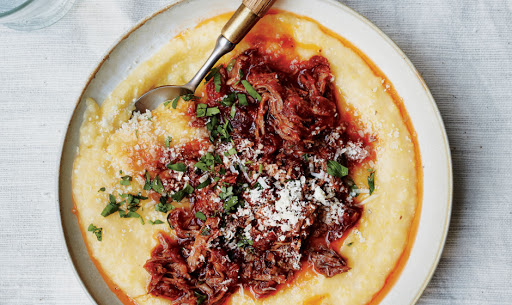
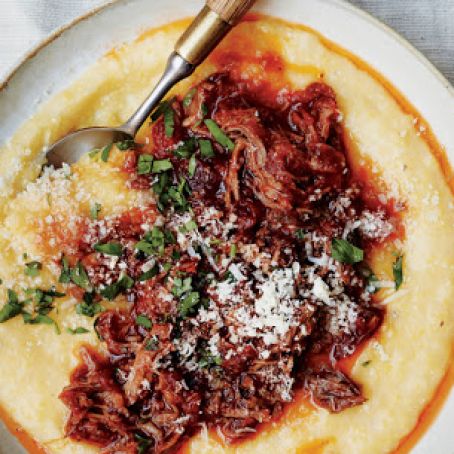
Pork Ragù over Creamy Polenta
By lorik
 1 Picture
Ingredients
- Pork:
- 3 pounds skinless, boneless pork shoulder (Boston butt), cut into 3 pieces
- Kosher salt and freshly ground black pepper
- 1 tablespoon vegetable oil
- 1 large onion, finely chopped
- 6 garlic cloves, finely chopped
- 2 tablespoons tomato paste
- 1/2 cup full-bodied red wine
- 1 28-ounce can whole peeled tomatoes
- 4 sprigs thyme
- 2 sprigs rosemary
- 2 bay leaves
- Polenta and assembly:
- Kosher salt
- 1 1/2 cups coarse polenta (not quick-cooking)
- 1/4 cup unsalted butter
- 1/2 cup grated Parmesan (from about 2 ounces), plus more for serving
- Freshly ground black pepper
- 1/2 cup chopped fresh parsley
- Olive oil (for drizzling
- Variation from Food 52:
- Serves 6
- 2 to 2 1/2 pounds boneless pork shoulder roast, tied with twine if there are any loose pieces
- 1 small onion, chopped
- 1 garlic clove, minced
- Salt and pepper
- 2 tablespoons olive oil
- 1 small pat butter
- 1 28-ounce can whole tomatoes, with juice
- 1 cup red wine
- 5 sprigs fresh thyme
- 5 sprigs fresh oregano
- Small handful of fennel seeds
- 1 tablespoon hot sauce, for smokiness (Andy used Trader Joe's Hot Chili Sauce, but Sriracha and Tabasco both work great, too)
- Pappardelle
- Freshly grated Parmesan
Details
Servings 8
Adapted from bonappetit.com
Preparation
Step 1
Season pork with salt and pepper. Heat oil in a large heavy pot over medium. Cook pork, turning often, until evenly browned, 10–12 minutes. Transfer to a platter and pour off pan drippings.
Wipe out any burned bits from pot, but leave the golden-brown pieces (doing this will keep the finished sauce from tasting bitter). Add onion and garlic to pot and cook, stirring occasionally, until onion is starting to brown and caramelize, 12–15 minutes. Add tomato paste and cook, stirring occasionally, until slightly darkened in color, 5–8 minutes.
Add wine and cook, scraping up any browned bits, until reduced by about half, 5–8 minutes.
Add tomatoes, crushing with your hands as you go, then add thyme, rosemary, and bay leaves; stir in 2 cups water. Add pork with any juices accumulated on the platter; season with salt and pepper.
Bring liquid to a boil, then reduce heat and simmer, partially covered, until pork is falling-apart tender, sauce is thickened (it will be thicker than a typical pasta sauce), and flavors have melded, 2½–3 hours.
Using 2 forks, break up pork into pieces or shred it (your choice!); taste and season with salt and pepper.
Pork can be cooked 5 days ahead. Let cool; cover and chill in sauce.
Bring 6 cups salted water to a boil in a large pot. Whisking constantly, gradually add polenta; reduce heat to medium-low. Cook, whisking often, until polenta is tender and creamy, 20–25 minutes (if polenta becomes too thick too soon, loosen mixture by adding more water and continue cooking). Add butter and ½ cup Parmesan to polenta and whisk until melted; season with salt and pepper.
Spoon polenta into bowls or onto a platter and top with pork. Scatter parsley and more Parmesan over top and drizzle with oil.
Variation from Food 52:
Preheat oven to 325° F. Liberally salt and pepper the pork roast. Add olive oil and butter to large Dutch oven and heat over medium-high until butter melts, but does not burn. Add pork roast to pan and brown on all sides, about 8 to 10 minutes in all.
Add the onion and garlic and saute for 1 minute. Add tomatoes, wine, thyme, oregano, fennel, and hot sauce and bring to a boil. Cover, and put in oven.
Braise for 3 to 4 hours, turning every hour or so. Add more liquid (water, wine, or tomato sauce) if needed. (The liquid should come to about 1/3 of the way up the pork.) Meat is done when it’s practically falling apart. Put on a cutting board and pull it apart with two forks, then add back to pot and stir (or shred right in the pot).
Cook 1 to 2 pounds pasta according to package directions. When it’s is ready, put into individual bowls and top with ragu and lots of Parm. Alternately, toss the pasta with the ragu and a bit of pasta cooking water, as needed, and top with Parm.
Review this recipe