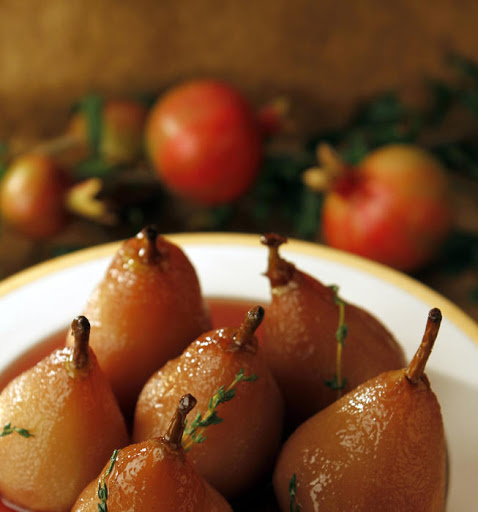
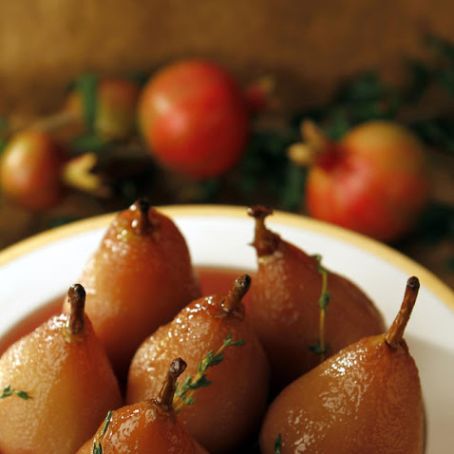
Pears in Pomegranate Wine with Honey and Lemon Thyme
By MarielC
 1 Picture
Ingredients
- 1/2 cup light-colored honey
- 12 pieces lemon thyme, each 1 to 1 1/2 inches long
- 1 tablespoon freshly squeezed lemon juice
- 6 large pears
- 2 to 2 1/2 cups pomegranate wine
- 6 allspice berries
- 3/4 cup cane or turbinado sugar
Details
Servings 1
Adapted from recipes.latimes.com
Preparation
Step 1
Up to 3 days before Rosh Hashana, mix together the honey, lemon thyme pieces and lemon juice. Cover and refrigerate.
Pour the wine into a wide-bottomed pot and add the allspice and sugar. Bring to a boil over medium-low heat, stirring to dissolve the sugar. Place the pears on their sides in the pot, cover and cook over medium-low heat about 20 minutes or until the pears are tender when pierced with a toothpick. Turn them gently with a spoon several times during the cooking process. Let the pears cool in the cooking liquid, turning occasionally.
Remove the pears from the cooking liquid and bring the cooking liquids to a boil. Cook over medium heat until the liquid thickens, about 5 to 8 minutes. Pour the liquid over the pears, then cover and refrigerate until just before serving time, turning the pears occasionally.
Before serving, bring the pears to room temperature. Stand each pear in the middle of a plate, pour over about a tablespoon of the honey mixture, place 1 to 2 of the lemon thyme sprigs at the base or over the top and serve.
Foodstuffs were among the first symbols in Judaism, beginning from the fateful day when God chastised Adam and Eve for eating that forbidden fruit from the tree of knowledge. In biblical times, the grapevine symbolized security and well-being, peace, quiet and abundance, as did the fig tree. ("They shall sit every man under his vine and under his fig tree / And none shall make them afraid.") The grape was so revered that it is the only fruit to have its own blessing (when consumed as wine).
King Solomon graced the pillars of the Holy Temple in Jerusalem with carvings of pomegranates, and the Bible required that they adorn the priests' garb as well. Its form embellished coinage of old, and the tufted crown of the pomegranate is purported to be the first inspiration for the kingly headdress.
Although we are of Ashkenazi descent, in my home we have also adopted the Blessings Tray ceremony, and added a bowl of assorted items (such as a key and a peach) with which family members can invent their own blessings ("may we have the key to health this year," "may we have a peachy year"), just for fun.
Review this recipe