
How to Render Beef Tallow
By ceyana
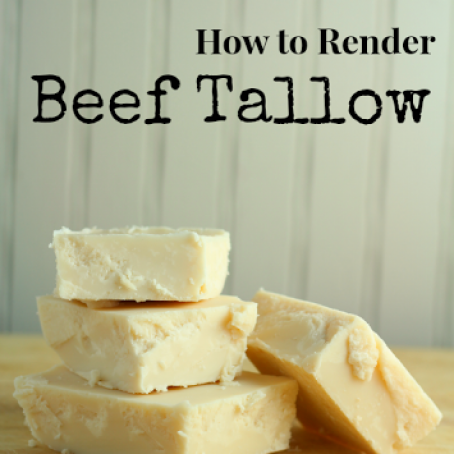 1 Picture
Ingredients
- Quality grass fed beef fat (suet)- any beef fat can be rendered into tallow, but "leaf fat," which lies around the kidneys, is best
- Large stock pot OR slow cooker
- Clean glass jars for storage (wide mouth)
- Cheesecloth or improvised cheesecloth alternative
- Time...
Details
Servings 1
Adapted from theprairiehomestead.com
Preparation
Step 1
Rendering tallow is NOT difficult, however, it can take a little bit of time. From the research I’ve done, there seems to be two methods: wet rendering (where you add some water to the pot), and dry rendering (no water.) I chose to go with the dry method, as it just seemed simpler and there is less concern about the fat going rancid.
until it is the consistency of ground meat. If you don’t have a processor, you can simply chop the fat into small pieces, but shredding it makes the rendering process go much faster.
very low heat
Now, it’s just a waiting game. It will probably take several hours, depending on how much fat you are rendering. I had my 6-quart crockpot full, and it took 5-6 hours to render. Check the fat occasionally for burning and give it a stir when you think about it.
. You want to remove all of the “floaties”, so you will definitely need something more than a colander here (although you may want to place your cheesecloth inside a colander to make the straining easier).
Pour into your jars OR line baking pans with parchment paper or waxed paper and pour the liquid fat into the pans. Allow it to harden completely. If you are using fat from a beef-breed animal (Angus or Hereford for example), your tallow should turn a creamy white as it cools. If the fat is from a dairy breed, then it’s likely the hardened tallow will be bright yellow. Neither one is better or worse–just different.
(it makes
Dump shredded fat into a large stockpot or slow cooker for several hours and use very low heat to begin melting
Check fat and stir occasionally to make sure it's not burning
Strain tallow through a piece of cheesecloth or fabric to remove all the "floaties" (you may want to place your cheesecloth inside a colander to make straining easier)
Pour into jars and allow to harden and cool at room temperature
How to Make Tallow Emergency Candles
How to Make Cultured Butter
I just rendered 20 pounds of tallow over the weekend. I didn’t chop or grind it, just tossed it in my roaster oven and stirred occasionally. Once done, I pour it through a colander (into a tall pot) to strain out the major chunks. Then, I just let it sit for a few hours — not enough to harden but it cools somewhat and the smaller bits settle out. It’s then easy to ladle out the clear fat into containers. I prefer to put it into large, shallow pans, no more than an inch or so deep, to cool. Then I can break it up like almond bark and put it in bags in the fridge/freezer. When I need to use some, I can take out chunks, breaking them smaller if needed. So much easier than digging into jars with a spoon!
Great post. I’m thinking of pouring it into my muffin tins, let it harden, pop it out ,store in zip-lock bags in the freezer. I like simple, also I have freezer space. Thanks for all the info.
Or pour into ice cube trays to freeze and dump out to store in large zip locks in the freezer- that way you’ve got 2 Tablespoon increments of tallow to use in recipes or whatever. I do this with all my highest quality homemade cooking fats- homemade butter, chicken and turkey fat, leaf lard, and the organ tallow fat. So convenient! I am super excited the next time we get a deer or elk to render their tallow as well. Apparently its even harder than beef tallow- should be great for candles or soap! (that stuff I don’t mess with the ice cube trays, however)
Could you mix two kinds of fat, or more? chicken, pork, beef?
You mean mix them for the rendering process? I’m not sure- but I’d probably lean towards render just one kind at a time.
Heather H.
You’ll have so much fun with your cows, Heather. Enjoy!
suzyhomemaker
Just purchased some suet from the local butcher shop ($1.00 a pound, not bad I guess). I didn’t really know how much to get or what it would render down to,so I just got 4 pounds. I’m going to make soap. So far I’ve only done vegetable soap, trying my hand at tallow now. Thanks for the great information.
I just rendered beef tallow today for the first time. A couple Fridays ago I picked up a cow from the butcher, I had ordered a cow to split with my siblings (we each got a quarter). That was a first for me, but I read online to request the suet, so you can make tallow. I thought that would be pretty neat to learn to do, so I requested it and was given it for free, a huge thing of it. Anyway, today was the day. I did not use a food processor to chop it up. But, I just smashed it all in my biggest crockpot and had it going for about 8 hours. I got rid of all the big chunks, and strained the rest, and put them in cans. They are now cooling on the stove. It was pretty simple but it made my house smell REAL BAD all day long. It also made my dogs crazy
I could not imagine having morning sickness and smelling that… you must be so strong!!! (or have a super strong stomach!) But once all the extras were thrown out (to the dismay of my dogs) the actual tallow itself was not bad smelling. Weird how that works. I used an old coffee container (hard plastic) to pour it in once it started to cool down (easy to scrape out) and then I used 2 quart wide mouth canning jars. It was actually pretty easy to do, thank you for the recipe.
I’ve got a question, the answer to which might help Sir Bob, here. Technically, I render tallow every time I fry up a pound of ground beef. After clogging my drain with the “waste” fat, and seeing the lovely lump of tallow that the repairman pulled out of my drain, I started pouring off and refrigerating the “waste” fat from my ground beef. Now I’m wondering – Can I put this in a pan and finish rendering it? Should I just take the stuff that’s already white and solid, and toss the grainy stuff that separates out? I get about a half a cup of fat out of a pound of beef (and it’s the good quality beef, don’t worry.) and it seems a shame to just toss it.
I’m getting ready to butcher this week, very excited as I’m being taught how for the first time. One of the thing I’m excited about is having the fat to render, I’m a soap maker and would much rather use our organic grassfed oil than something that has to be transferred miles to get to us!!!
Love this post!! Can’t wait to make my own now that I know how. This is probably a silly question, but can you make tallow from cooked fat, or does it have to be raw? I have a bunch of fat left from a brisket and hate to throw it away. Thanks!
Hi Jess- I don’t see why you couldn’t make it from cooked fat. After all, you end up cooking to death during the rendering process anyway.
Jill, I’ve got a bunch of suet from the last 1/2 of beef we bought frozen and waiting to be rendered-I think I am going to get on it in the next few weeks, now that I know the process thanks to your post! My question is this: Do you see any issue with pouring the rendered fat into ice cube trays to freeze then pop out later and store in plastic bags in the freezer? I do this when I make butter, since the ice cubes are each 2 Tblspoons- nice for using in recipes or for sauteing or frying. I am thinking it might be an easy way to store the fat as well???? Also, have you rendered chicken or turkey fat? If so, is the process the same or different?
Can your get beef tallow from rendering any kind of suet? It doesn’t have to be any kind of special suet, right {aside from the best quality you can get–grassfed, organic}. Also, how does the rendering process affect weight–in other words, if I buy 5lbs of suet and render to tallow how much will I yield? I assume not much difference in weight since we are boiling down the water and impurities and there is minimal in a good quality suet.
Yes- tallow can be tricky to wash out… I would start by giving it a good rinse in hot soapy water while the tallow is still hot and liquid. You can then run it through your dishwasher or washing machine– just make sure that you get the bulk of the tallow out of the cloth first.
Hi — this post confirmed what I have concluded after almost 40 years of cooking — beef fat is useful and should be recycled. I bought a beef brisket at a cheap price. Beef brisket is cheap at certain times of the year in Texas. I slow roasted the brisket in the oven for about eight hours and saved all the drippings. I froze the drippings in a metal bowl until I was ready to work with the drippings which were about 6 cups of liquid and 3 cups of tallow. The liquid without the fat can be used in soups and casseroles instead of water. The liquid can be cooked down into a thick soup or paste and frozen for later use. When I popped the tallow out of the bowl as some other posters have suggested, there was still liquid attached to the bottom. I suppose the long cook time is to evaporate all that water. I reheated the tallow over very low heat on the stove top just until melted then refrigerated it. I will next try to pop off the tallow to separate it from the liquid. If that does not work I will simply pour off as much fat as possible and discard the rest. It is true that dogs love the smell of the fat. I have them about a teaspoon or less so they would calm down. They were quite content and went to sleep. I was unsure what to do with the tallow until I read your post. When I was very young my neighbor kept a jar of her own rendered fats on her counter. She was exceedingly obese which made me fearful of using fat, yet I feel better when I have a little bit of natural fat in my diet. I gain weight without any fat. Low carb diets make me grouchy and sickly no matter that people say that eventually my body will adapt — it doesn’t. I will selectively add some of the tallow to my diet and try the soap and candle making. Thank you for the tips and hints.
Jill, do you know if one can make tallow from lamb fat? I bought half a lamb recently and all the trimmed-off fat is living in a little bag in my freezer as I just had a feeling that I would find a use for it – and this may be it!
Yes! You should be able to make lamb tallow just fine.
1. Mixing two types of fat not really a good idea depending on what you are using them for. For instance, if you want to make soap, different fats have different saponification values. Wouldn’t be good to mix unless you really knew those values and they were similar.
3. If you want your lard to have that pretty white look, add 1/4 tsp of baking soda as you begin to melt the fat.
4. Add about a 1/4 cup of water (give or take depending on how much you’re rendering at a time) before you put in the fat. Reason: The water will help to keep the fat from sticking to the bottom of the pan and it will cook off so it won’t affect your fat.
5. It will most likely have a little bit of a grainy texture when done, just whip it up or stir it well while it cools and you’ll have a nice creamy textured end product.
6. Storage: Once you put it in mason jars, you can pressure can it. This way you can keep it at room temps with the rest of your canned items. You do need to pressure can, not water bath can it, at 100-120 minutes at 10 pounds of pressure. (check your canner manual for high altitude instructions, tho). This makes it a great way to do the prepper thing and know you have good lard/tallow on hand.
7. Note: Make sure all the water is cooked out of your fat tho because it can cause it to go rancid over time.
8. Lastly, the “floaties” on top are called “cracklins”. You know them from just about every southern show on TV. lol. Anyway, if you save those and mix them with peanut butter and some oats/raisins/whatever berries you want, squish them into whatever shape suits your mood and freeze them, they make the BEST treat you can give your feathered friends during the winter when they need a bit of extra fat to keep warm.
Ok..I have a question..I went through the responses and comments and didn’t see…Im new to all this. I bought a couple whole NY Strips..I cut off all the fat because we use it for things like fajitas etc. Can I make tallow out of the fat I cut from the NYS?
Yes– you can render down the fat trimmed from meat. However, it might be hard to get enough to make a substantial amount.
My Mom grew up in a big German family and learned to butcher, make sausage, and render lard. She never threw out the cracklins but used them in a bread dish she called baruch (sp?). It consists of finely shredded raw potato, onion, and the crackins all rolled into risen bread dough, pinched shut, and baked as a loaf. It would work equally as well as a filling for buns. We fought over this meal and tried to get the last piece if possible.
Yes– you can totally use your dutch oven– it’ll work just fine. Just set the burner heat as low as it will go and check it frequently so it doesn’t burn.
I filled up two cast iron skillets (the taller ones – more like a pot but the shape and size of a skillet – some people call them chicken fryers I think) plus my big pressure cooker pan. But, I had trouble getting anything to heat on my electric stove using the low settings – so I smashed the whole mess into my large crockpot. I don’t know the exact specification for the crockpot – but its the oval shaped one that seems to be about the size of two regular round shaped crockpots. Everything barely fit. As it cooked down, I used a metal measuring cup to dip hot oil out – I think it might have overflowed if I left it as it was. As it ended up, I’d say I have one absolutely full crockpot of oil/tallow and about 1/2 the pressure cooking pot full of cracklins. I took some photos – I’ll try to get them posted on my blog soon.
Can I use tallow in baking and cooking then to replace my vegetable shortenings, coconut oil and olive oils? Would there not be a noticeable flavour of beef?
I had slow cooked my fat for several hours, checking it about every half hour. The last time I lifted the lid to check it, it smoked a little and after straining it the color leaned a little more to the light brown side. Have I ruined it?’ Is it safe to use it if it reached a temperature high enough to make it smoke? If we can’t use it for cooking, is there any other way to use it? Thanks!
Jill… do you have somewhere on your site on how to make candles and soaps from the tallow? My mom used to render lard all the time, but in a roaster in the oven. I of course, am too ‘modern’ do to that! But, have been wanting to get back into that type of lifestyle. As much as I knew candles and soaps were made from tallow, it still didn’t sink in what the tallow was. You know that moment when 2 thoughts don’t quite connect and are left hanging until that… ah ha moment?! LOL
A great big howdy and hello from the banks of Blair’s Creek, MO. My husband and I live in a small cabin with no running water or electricity. We use candles and oil lamps for light so I decided to use the tallow from our cow we just butchered for candles sticks to save on some money from not having to buy candles at the store. Anyhow, as far as I know I rendered it right, however the tallow did not harden. It is as soft, (if not softer) than your average Crisco. I cooked it all down on an easy heat on our wood cook stove, then strained it into buckets. And there is sits, still quite soft. It makes excellent pie crusts however.
Did you check the temp before you strained? I use the wet method to all most of the fat to warm without burning. The heat will boil off the water and once the water is gone the oil temp will begin to rise. I find that if I heat until I reach 250F, the water is gone and the tallow is pure. Poured at this temp into Mason jars, the lids will seal snugly, as if they had been processed.
Your post inspired me to make my own bird suet cakes with tallow! I recently tried using Crisco but the result was way too soft. I’m vegetarian and have made peace with using an animal product. From my view, it is more respectful to use the fat that would otherwise be wasted. My local butcher gave it to me for free, I just tipped him a few bucks.
I literally have it in the crock pot now, and need to get to bed. It’s been going a couple of hours now and looks great. Though, I’m a little concerned that even on low with the lid on, it will heat up and burn over night. Do you think the warm setting with the lid on or the low setting with the lid off would be better? I’m sure you won’t get back to me in time, so I’ll update you on how it goes! Btw I didn’t food process it, just cut it in tiny chunks.
We like to feed the birds, and I didn’t want to add any more chemicals & hormones to their diet (commercial suet cakes are full of these), so I started buying natural/organic leaf lard & rendering it down to make my own suet cakes. I use an old hand-crank meat grinder to chop it up & 2 big stockpots to melt it down. It’s a multiple day process that I do about every other month., & while it’s time-consuming and messy, the results are well worth it
Suet cakes for the birds have to stand up to the weather. To make suet really hard, you have to double or triple render it ~ which means reheating and chilling repeatedly. After all the work you’ve done, this is the easy part. I simply strain the first rendering (thru a cheesecloth-lined colander) into a second big clean stockpot. I let it cool uncovered, on the stovetop for a couple of hours & then refrigerate covered, overnight. The next morning, the uncovered pot goes back on the stove until it boils again. Then cool & refrigerate as before. This is double-rendered suet. Do it once more & you have triple-rendered suet.
hey! we live in s. korea…husbands in the air force. I really want to render tallow, I went to the commissary and they gave me a lot of beef fat. just from regular beef. then I went to the Korean store that has the pasture raised beef I have been buying. they gave me a small amount of fat. is it a waste of time to render the regular beef fat, or will we still gain some nutrition from it? should I mix the 2 or just use the pasture raised beef fat? tia!
Learn how to make your own chicken feed, mix up non-toxic bug sprays & garden pesticides, create herbal salves for your animals, and more! Over 40 recipes and photos!
Review this recipe