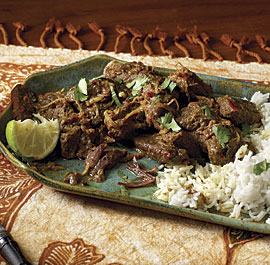
Beef Rendang
 1 Picture
Ingredients
- For the flavor base:
- 15 dried japones chiles or 10 dried chiles de árbol or 3 Tbs. sambal oelek
- 1-1/2 cups sliced shallots (from 4 large shallots)
- 2 Tbs. sliced garlic
- 1 Tbs. sliced peeled fresh ginger
- 1 Tbs. chopped fresh or frozen and thawed galangal (optional)
- For the whole spice blend:
- 4 whole cloves
- 4 whole green cardamom pods
- 2 whole star anise
- 1 3-inch-long cinnamon stick, snapped in half
- For the ground spice blend:
- 2 tsp. ground coriander
- 2 tsp. ground cumin
- 2 tsp. ground fennel seeds
- 1 tsp. ground turmeric
- 1/2 tsp. freshly ground black pepper
- For the rendang:
- 3/4 cup canola or vegetable oil; more as needed
- 2 lb. boneless top blade beef chuck (or bottom or top round, flank, or
- sirloin steak), cut into 1/2-inch-thick slices, then cut into 1-1/2- to
- 2-inch pieces
- 1 13.5-oz. can unsweetened coconut milk
- 1/4 cup tamarind concentrate
- 3 wild lime leaves, thinly sliced
- 2 medium lemongrass stalks, bruised with back of knife and tied in a knot
- 4 tsp. palm sugar or dark brown sugar
- 2-1/2 tsp. table salt
- 1/2 cup tightly packed grated fresh coconut or unsweetened frozen coconut, thawed
- 1/4 cup coarsely chopped fresh cilantro, for garnish (optional)
- Lime wedges, for garnish (optional)
Details
Servings 6
Adapted from finecooking.com
Preparation
Step 1
Serve this aromatic Malaysian specialty with jasmine or basmati rice. You can also enjoy it with bread, using it as a filling for pita, naan, tortillas, or any other flatbread. Rendang is typically very thick, but if you prefer a saucier dish, you can add a little water after adding the toasted coconut at the end.
Make the flavor base:
If using dried chiles, steep them in hot water until pliable, 5 to 8 minutes; then slit and seed them (use gloves). Put the chiles, shallots, garlic, ginger, galangal (if using), and 1/4 cup water in a food processor and process to a coarse purée, about 3 minutes (if using whole dried chiles, you’ll still see little pieces of the skins).
Make the spice blends:
In a small bowl, combine the cloves, cardamom pods, star anise, and cinnamon pieces. In a second small bowl, combine the coriander, cumin, fennel, turmeric, and pepper.
Make the rendang:
Heat 2 Tbs. of the oil in a 12-inch skillet or wok over medium-low heat until shimmering hot. Add the whole spice blend and cook, stirring constantly, until the cinnamon sticks unfold (the cardamom may also crack open), 1 to 2 minutes; don’t let the spices burn. Add another 2 Tbs. of the oil and the ground spice blend and cook, stirring constantly, until the mixture sizzles and becomes fragrant, 30 to 60 seconds more (if the spices stick to the pan, add a little more oil to prevent burning).
Add the remaining 1/2 cup oil and the flavor base and cook, stirring, until the purée is an intense reddish-brown, about 10 minutes. Raise the heat to medium, add the beef and cook, stirring, to coat it with the spices, about 2 minutes. Add the coconut milk, tamarind concentrate, lime leaves, and lemongrass and cook, stirring constantly, until the mixture comes to a boil, about 5 minutes.
Reduce the heat to low, add the sugar and salt, and simmer, stirring occasionally for the first hour and then more frequently as the stew thickens, until the liquid is very thick and oil appears on its surface, about 1-3/4 hours. The meat will not be fork-tender at this point.
Meanwhile, squeeze any excess liquid from the coconut with your hands. In a 10-inch skillet, toast the coconut over low heat, stirring constantly, until golden-brown, about 10 minutes. Transfer to a small bowl.
Stir the toasted coconut into the stew and then continue stirring until it's incorporated and much of the liquid is gone, about 15 minutes. Add 1 cup water if you prefer a saucy consistency. Continue to cook, stirring frequently, until the meat is fork-tender, 20 to 30 minutes more (the oil will start frothing after 15 to 20 minutes).
Make Ahead Tips
Really excellent. I made the base - then separated half of it and made it with Chx for my non-beef eating friend. Both were excellent.Only thing I did: I easily took out almost 1/2 C of oil near the end - so next time i am going to try to make with less.
by Bigdaddy316,
3/25/2012
I'd give this three thumbs up if it were anatomically possible. I really liked the flavor combinations which come together very well for the final product. I used 4 cayenne in place of jalapeño as that is what I had on hand, probably a bit more heat in mine but I'm going to try this again soon with the recommended peppers. I served this with a coconut water, rum and lime drink which compliments it well. Very easy preparation too with the purée in the food processor.
As an American who has lived in Malaysia and traveled throughout Southeast Asia, I can say this is a truly fabulous recipe that is authentic Malaysian but will also appeal to anyone who likes flavorful food. Indofoodie - I suggest you do a little reading before you write. Check out the excellent cultural history in the intro to Susheela's "Flavors of Malaysia" cookbook. Malaysia and Indonesia are seperate countries today only because of colonial decision making over the last few centuries. For 10s of thousands of years "Malay" peoples from somewhat different tribes and groups migrated throughout the "Malay Archipeligo." So you find Bugis, Minangkabau and other "Malay" groups in both present day Malaysia and Indonesia. Indeed, large parts of present day Thailand and Indonesia were Malay Sultanates for centuries before the west "discovered" and created these seperate countries. Also consider that while there are numerous languages spoken throughout the region, the official languages of both countries - Bahasa Malayu and Bahasa Indonesia - are so close that if you speak one you will easily communicate in the other. What you do find with a recipe, such as beef rendang, is that it can be found in present day Malaysia and Indonesia with regional variations. And there are several million Malaysians who will agree that Susheela's recipe is authetic Malaysian! Moreover, you will find that the recipes for rendang in Padang Sumatra, Java and Bali (all present day Indonesia) are different from each other. And you will NOT find today a recipe for rendang among the indigeous peoples of Kalimantan or Irian Jaya (also present day Indonesia)! So Indofoodie, I suggest that instead of getting heated up about a name, heat up this recipe, taste and smile!
I sent away for the special ingredients needed for this dish as soon as I saw the recipe. Within a week, I made the dish. It was amazing. So many different flavors intermingling, and exotic spices and other ingredients I don't often (or ever) use. I highly recommend this recipe. I did add the extra water near the end, to make more sauce. This was yummy over jasmine rice.
Review this recipe