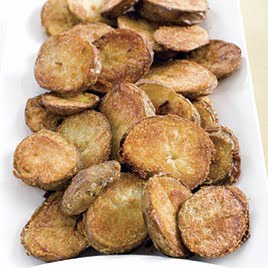
Crisp Roasted Potatoes
By LaLaCooks
The steps of parcooking the potatoes before roasting and tossing the potatoes with salt and oil until they are coated with starch are the keys to developing a crisp exterior and creamy interior. The potatoes should be just undercooked when they are removed from the boiling water.
WHY THIS RECIPE WORKS: The aroma of roasting potatoes draws everyone into the kitchen come meal time. Too often, though, the potatoes turn out brown and leathery with a mealy interior, or worse, soft with no crisp crust at all. We wanted oven-roasted potatoes that had a crisp crust with a silky interior.
We tested using different potatoes and found that we liked Yukon Golds best. Parcooking the potatoes before subjecting them to high oven temperatures helped them develop a somewhat crisper exterior, but the browning was uneven and they still weren’t crispy enough. When we switched from cubing the potatoes to slicing them thick, we created more surface area for crisping but enough heft for a creamy interior. As an added bonus, with only two surfaces to cook, we now only had to flip the potatoes once halfway through roasting. We boiled the potatoes very briefly to prevent them from breaking up on the baking sheet, and we tossed the precooked potatoes with some olive oil to rough up the exteriors and increase crispiness.
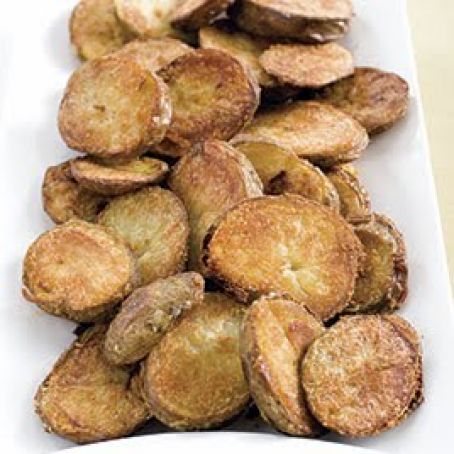 1 Picture
Ingredients
- 2 1/2 pounds Yukon Gold potatoes , rinsed and cut into 1/2-inch-thick slices
- Table salt
- 5 tablespoons olive oil
Details
Servings 4
Preparation
Step 1
1. Adjust oven rack to lowest position, place rimmed baking sheet on rack, and heat oven to 450 degrees. Place potatoes and 1 tablespoon salt in Dutch oven; add cold water to cover by 1 inch. Bring to boil over high heat; reduce heat and gently simmer until exteriors of potatoes have softened but centers offer resistance when pierced with paring knife, about 5 minutes. Drain potatoes well and transfer to large bowl. Drizzle with 2 tablespoons oil and sprinkle with 1/2 teaspoon salt; using rubber spatula, toss to combine. Drizzle with another 2 tablespoons oil and 1/2 teaspoon salt; continue to toss until exteriors of potato slices are coated with starchy paste, 1 to 2 minutes.
2. Working quickly, remove baking sheet from oven and drizzle remaining tablespoon oil over surface. Carefully transfer potatoes to baking sheet and spread into even layer (skin-side up if end piece). Bake until bottoms of potatoes are golden brown and crisp, 15 to 25 minutes, rotating baking sheet after 10 minutes.
3. Remove baking sheet from oven and, using metal spatula and tongs, loosen potatoes from pan, carefully flipping each slice. Continue to roast until second side is golden and crisp, 10 to 20 minutes longer, rotating pan as needed to ensure potatoes brown evenly. Season with salt and pepper to taste and serve immediately.
TECHNIQUE
CRISP, EVENLY BROWNED SPUDS
1. DISKS, NOT CHUNKS
Half-inch rounds require only one flip, making it far easier to ensure each side gets equal time facedown on the pan.
2. PARCOOK
Simmering the potatoes brings the starch to the surface, jumpstarting the crisping process.
3. PREHEAT SHEET
Preheating a rimmed baking sheet also gives cooking a head start, for crisper results.
4. TOSS VIGOROUSLY
Roughing up the parboiled potatoes with salt and oil damages the surface cells, which speeds up evaporation.
TECHNIQUE
JUST SCRATCHING THE SURFACE
We discovered that parcooked potato slices browned faster in the oven than raw slices. When we subsequently “roughed up” the parcooked slices by tossing them vigorously with salt and oil, they browned faster still. The explanation? It’s all a matter of surface area. Browning or crisping can’t begin until the surface moisture evaporates. The parcooked, roughed-up slices—riddled with tiny dips and mounds—have more exposed surface area than the smooth raw slices and thus more escape routes for moisture. If you have trouble getting your head around two potato slices of identical width having vastly different surface areas, think of it this way: Five square miles of Colorado’s mountain region will have far more exposed surface area than 5 square miles of the Kansas plains. (Just try walking them both.)
Review this recipe