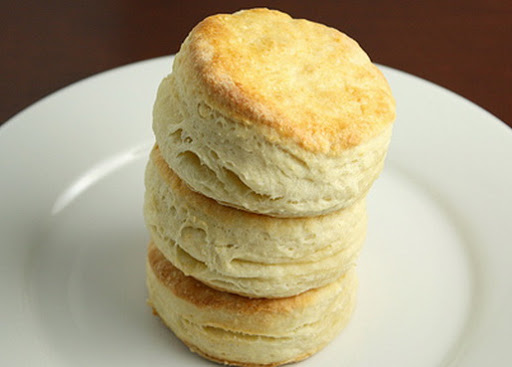
Flaky Buttermilk Biscuits
By Addie
I’ve never had any luck with biscuits. I’ve tried a lot of recipes, searching for a great one but was always unhappy with the results. I was convinced that the problem was me and not the recipes :) I made these biscuits (recipe from the great Peter Reinhart of Bread Baker’s Apprentice fame) tonight though and came as close as I ever have to biscuit perfection. Perhaps it’s not me after all! These are light and buttery and worth the little bit of extra effort. Don’t panic if you peek in the oven while they’re baking and see butter running out of them. They’ll be great when they’re done and not the least bit greasy!
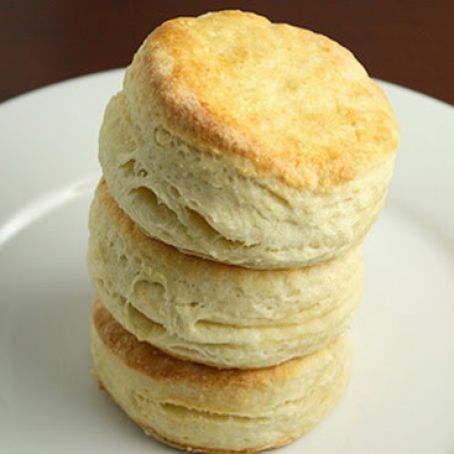 1 Picture
Ingredients
- 8 oz. (1-3/4 cups) unbleached all-purpose flour; more as needed for shaping the dough
- 1 Tablespoon granulated sugar
- 2 1/4 teaspoon baking powder
- 3/4 teaspoon kosher salt (I thought they needed a bit more salt, so I’ll try 1 teaspoon next time)
- 1/4 teaspoon baking soda
- 4 oz. (8 Tbs.) very cold unsalted butter
- 3/4 cup very cold buttermilk (or 3/4 cup less 2 tsp. milk plus 2 tsp. vinegar and let stand 5 minutes or just use plain milk, if you like)
Details
Preparation
Step 1
Measure out the butter and buttermilk and place in the freezer to get very cold while preparing the dry ingredients.
Heat the oven to 500° F. and position a rack in the middle of the oven. Line a rimmed baking sheet with parchment (note the rimmed part because butter will melt out of these and will run off the pan without a rim).
Put the flour, sugar, baking powder, salt, and baking soda in a large mixing bowl and stir with a whisk to distribute the ingredients evenly.
Cut the butter into small bits and toss with a bit of flour (the idea here is to just coat it a bit so it doesn’t all stick together when you cut it). With a sharp knife or a bench knife, cut the cold butter crosswise into 1/4-inch-thick slices. Stack 3 or 4 slices and cut them into three even strips. Rotate the stack a quarter turn and cut the strips in half. You should create 6 small bits of butter per slice. Toss the butter bits into the bowl with the flour mixture. Continue cutting all the butter in the same manner and adding it to the flour mixture.
When all the butter is in the bowl with the flour, use your fingers to separate the butter bits (they tend to stick to each other), coat all the butter pieces with flour, and evenly distribute them throughout the flour mixture. Don’t rub the butter too hard with your fingertips or palms, as this will melt the butter. You’re just trying to break the butter pieces apart, not blend the butter into the flour.
When all the butter is evenly distributed, add the cold buttermilk and stir with a large spoon until all or most of the flour is absorbed by the buttermilk and the dough forms a coarse lump, about 1 minute.
Dust a work surface with flour and dump the dough onto the floured surface, cleaning out the bowl with a spatula or a plastic bowl scraper. Dust the top of the dough and your hands with flour, and press the dough into a 3/4-inch-thick rectangle. Sprinkle a small amount of additional flour on the top of the dough. Fold the dough over on itself in three sections, as if folding a letter (also called a tri-fold). With a bench knife or metal spatula, lift the dough off the counter and dust under it with flour to prevent sticking, if necessary. Dust the top with flour and press the dough out again into a 3/4-inch-thick rectangle and repeat the tri-fold. Repeat this procedure one more time (three times in all).
After the third tri-fold, dust under and on top of the dough, if needed, and roll or press the dough into a 1/2-inch-thick oval. Dip a 2-inch or 2-3/4-inch round biscuit cutter in flour and start cutting biscuits, dipping the cutter in flour between each biscuit. Press straight down to cut and lift straight up to remove; twisting the biscuit cutter will seal the sides and interfere with rising. Use a bench knife or spatula to transfer the biscuits to the baking sheet, placing them about 1/2 inch apart. (*Alternately, after pressing dough out into a rectangle, transfer to prepared baking sheet and cut into 8 wedges with a very sharp knife. Separate the wedges from each other and proceed to bake. I like this method as it results in less handling of the dough from re-rolling scraps etc.)
Gently gather any scraps of dough, pat and roll out again, and cut more biscuits from the remaining dough. You can gather and roll the scraps two times total and still get good results (the more times you roll out, the tougher the biscuits will be).
Put the baking sheet in the oven and reduce the temperature to 450° F. Bake for 8 minutes; rotate the pan 180 degrees; continue baking until both the tops and bottoms of the biscuits are a rich golden brown and the biscuits have doubled in height, 4 to 6 minutes more. It’s all right if some butter seeps from the biscuits. Remove the pan from the oven and set it on a cooling rack, leaving the biscuits on the pan. Cool the biscuits for at least 3 minutes and serve them hot or warm (they will stay warm for about 20 minutes).
These are rich and butter and the perfect side with soup or stew. Also great for sandwiches.
Review this recipe