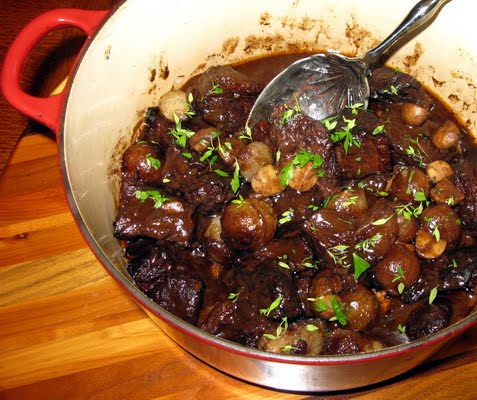
Boeuf Borguignon by Julia Child
By RoketJSquerl
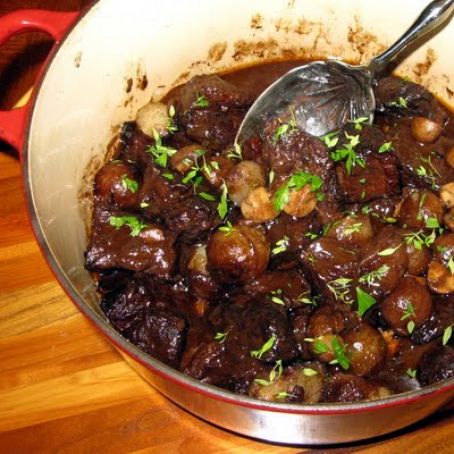 1 Picture
Ingredients
- 6 Ounces Thickly Sliced Bacon Cut Into 1/2" Wide Pieces Down the Length of the Bacon Slices
- 1 Tablespoon Olive Oil
- 3 Pounds Fairly Lean Stewing Beef, cut into 2" cubes (I used half top round and half chuck, well trimmed of fat)
- 1 Large Peeled and Sliced Carrot
- 1 Large Sliced Onion
- 1 Teaspoon Salt
- 1/2 Teaspoon Freshly Ground Black Pepper
- 2 Tablespoons All Purpose Flour
- 3 Cups Full-bodied Red Wine (i Used Cabernet Sauvignon, as I noted earlier)
- 2 Cups Beef Stock or Broth (2 to 3)
- 1 Tablespoon Tomato Paste (i Use the Kind That Comes in Tubes Like Toothpaste–so Convenient!)
- 2 Large Cloves Garlic, minced (mine worked out to be about a tablespoon and a half after it was minced–big cloves of garlic!)
- 1/2 Teaspoon Thyme
- 1 Bay Leaf, crumbled
- 18 Pearl Onions, peeled
- 1 1/2 Tablespoons Butter
- 1 1/2 Tablespoons Olive Oil
- 1/4 Cup Red Wine (from the Same Bottle as the Wine for the Beef!)
- 1/2 Cup Beef Stock or Broth
- 1/2 Teaspoon Dried Thyme
- Salt and Pepper to Taste
- 2 Tablespoons Butter
- 1 Tablespoon Oil
- 1/2 Pound Fresh Mushrooms, washed, dried and trimmed–if small, leave whole, if larger, quarter
- Salt and Pepper to Taste
- A Tiny Amount of Balsamic Vinegar–if Needed*
- Fresh Thyme Leaves and Chopped Fresh Parsley Leaves for Garnish
Details
Servings 8
Adapted from tigersandstrawberries.com
Preparation
Step 1
Preheat your oven to 450 degrees F.
Heat the first measure of olive oil in a heavy-bottomed skillet over moderate heat. Cook the bacon until it is just starting to brown and is nicely brown, but is not crisp. Remove from skillet and set aside on a plate. Turn the heat up to high and let the oil and rendered bacon fat come nearly to the smoke point.
Dry the cubes of beef well on paper towels–remember if the meat is not dry, it will not make a nice browned crust. Brown it on all sides in the same skillet in which you cooked the bacon. Do it in batches if you have to–don’t crowd the pan or the meat will not brown as nicely.
When the beef is brown all around, remove it and set it aside on the plate with the bacon.
Dump the sliced onion and carrot into the same skillet and sprinkle with the salt and pepper, then cook, stirring, until the onions brown really well–they should be a reddish color, and the carrots are browned at the edges. Scoop the vegetables out with a wire skimmer and put them with the meat. Dump out the cooking oil.
Put the beef, bacon, onions and carrots into a heavy bottomed Dutch oven or deep casserole dish. Sprinkle the flour over everything and toss the meat especially to coat it well.
Pop it uncovered into the oven for exactly four minutes. Take it out and stir it well making sure to turn the meat, and put it back in for another four minutes.
Take it out and turn the oven temperature down to 325 degrees F.
Stir in the wine and enough stock or broth to make sure that the beef cubes are just barely covered. You can have wee bits and corners of the cubes poking out–but you don’t want huge swaths of meat uncovered–you don’t want it to dry out. Stir in the garlic, the tomato paste, the bay leaf and the thyme, then turn the heat on under the pot and bring the liquid to a nice easy simmer.
Clap the lid on the pot and into the oven it goes. Check it now and again to make sure it is simmering, not boiling and that the liquid level is not reducing too quickly. Otherwise, you can leave the pot pretty well undisturbed.
While the beef cooks, prepare the onions: Melt the butter and olive oil measures that come in the list right under the pearl onions in a skillet or wide saucepan. Add the onions, and cook, tossing and stirring and rolling the onions gently around until they are as evenly browned as you can manage–they won’t be perfect because these little rascals just roll back and forth and won’t keep enough to get an even tan.
When they are a nice golden color flecked with some pale white shimmer showing, pour in the wine and stock or broth and add the thyme.
Bring to a simmer over high heat, turn the heat down and cover the saucepan and cook, stirring as needed, until the onions are mostly tender. Remove the lid from the pot and cook, shaking and stirring until the liquid reduces down to nothing more than a shiny deep reddish brown glaze that clings mostly to the onions, but a bit to the pot. Add salt and pepper to taste to the onions, toss them once or twice more to distribute the salt and pepper, and set aside to be added to the beef at the last moment before service.
Once the onions are done–make the mushrooms.
Melt the last measure of butter with the last measure of olive oil in a saute pan. Put half of the mushrooms in the pan, and cook, stirring and tossing, until the mushrooms take on a deep golden hue with lightly crispy browned edges. Pour the cooked mushrooms into the same bowl as the onions and cook the second batch the same way. Set them aside with the pearl onions.
The beef is finished cooking when a fork with easily pierce it and just as easily slide out again. If the beef clings to the fork, even if the fork went in easily, the meat still need to cook some more. But when it is ready, remove the beef from the cooking pot and set it aside with the pearl onions and mushrooms. If you want to go fishing around for the pieces of bacon, by all means, do so, but I didn’t bother and the dish was still fantastic.
Then place a fine sieve over a saucepan and scoop the liquid and remaining solids out of the cooking pot into the sieve. Press the solids against the sieve to remove as much liquid from them as possible–the sauce is thick and will cling to the solids. What I did was ladle the contents of the pot one or two ladlesful at a time into the sieve, and then I was mash and stir the stuff in the sieve against it and let all of the sauce be pushed or drip out, then I would empty the solids from the sieve for the compost bucket, though if I still had dogs, I would have given the solids to them–they would have loved it. Then, I repeated until I had the pot emptied and the sauce all collected.
Then, scrub out your cooking pot, and dry it well. Put the beef, pearl onions and mushrooms into it.
Heat the sauce in the saucepan over medium heat until it simmers. If it is thick enough to lightly coat the back of a spoon, you are golden and have to do very little. If it is too thick, thin it out with a tiny bit of broth–if it is too thin, bring the sauce to a boil and reduce it to the proper thickness. If you defatted your beef and poured out the oil well, you will have very little to no excess fat in the sauce, but if you do, and some comes to the top as you simmer it, skim it off and discard it. You should end up with about two and a half cups of really delicious sauce. Taste your sauce and add salt and pepper as needed–and a tiny dash of balsamic vinegar if it is properly salted and peppered, but still tastes just a little bit flat.
When the sauce is the proper thickness, pour it over the meat and vegetables and give it a nice stir to coat everything, and then sprinkle with the fresh herbs and either keep it warm in its pot–this is why cast iron enameled pots are so great–or serve it right away, with a salad, some boiled potatoes and some good baguette to sop up the sauce.
Review this recipe