Soccarat Technique for Paella
By stancec44
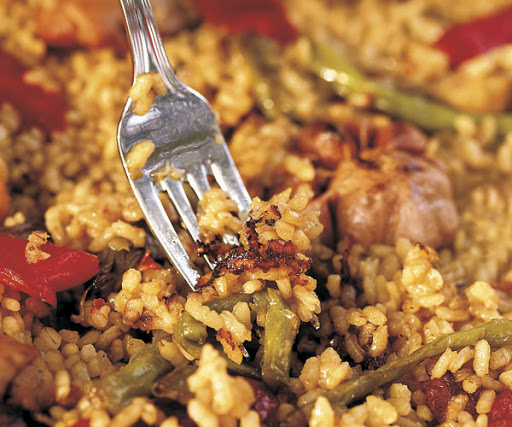
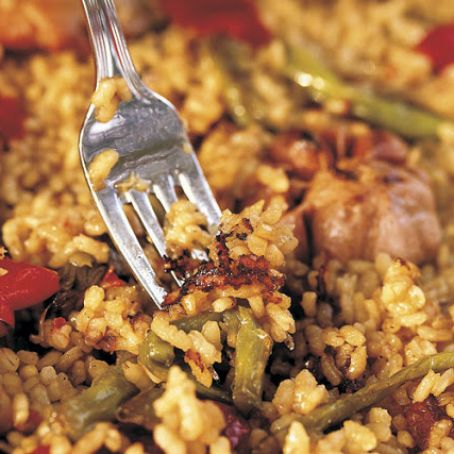
Perfect paella is all about the rice: tender and al dente (never mushy), with a caramelized crust on the bottom of the pan, called a socarrat. Go to http://www.finecooking.com/recipes/paella.aspx for her recipe.
 1 Picture
Ingredients
- Rice and Paella ingredients
Details
Adapted from finecooking.com
Preparation
Step 1
From my mother, Carmen, I've learned how to make paella by simply following my intuition. However, the scholar in me seeks hard data, so I've come up with five principle elements that determine the nature of the paella. They are: the rice, the pan, the distribution of heat, the sofrito, and the liquid.
The rice should be medium grain. Spanish rice is rounded and short; it absorbs liquid very well, and it stays relatively firm during cooking. Those qualities make it ideal for paella, where the rice grains absorb flavor from the liquid; the rice should be dry and separate when done, not creamy like risotto. The most appreciated variety of Spanish rice is bomba, which can be ordered by mail in the U.S., but you'll also have success with the widely available medium-grain rice sold by Goya. Arborio is an acceptable substitute; long-grain rices, however, are not.
A true paella pan is wide, round, and shallow and has splayed sides. It has two looped handles and may dip slightly in the middle so the oil can pool there for the preliminary sautéing. The shape of the pan, which is called either a paella or paellera (pah-ay-yair-ah), helps to ensure that the rice cooks in a thin layer. The Valencians say that the cooked rice should be only as thick as un ditet, or the width of a small finger (about 1/2 inch). The key is to maximize the amount of rice touching the bottom of the pan because, as you'll see, that's where the flavor lives. For that reason, paella pans grow in diameter rather than in height. A 14-inch paella pan with un ditet of rice serves two to four people; an 18-inch pan serves six to eight.
A good paella pan is made of a very thin, conductive metal, usually plain or enameled steel. I've recently seen quite a few objects masquerading as paella pans. For example, those beautiful heavy and expensive copper or stainless-steel pans that some stores market as paella pans are actually better suited to braising than to making paella. And any pan that's sold with a lid is a dead-giveaway impostor: except for the final resting period, paella is cooked uncovered. Paella pans can sometimes be found in Latin American or Hispanic markets. Or order them from The Spanish Table, which carries paella pans in a range of sizes, along with bomba rice and many other Spanish products.
If you don't have a paella pan, the alternative is to use a skillet. A 13-inch or larger stainless-steel or aluminum skillet will work; otherwise, use two medium skillets (which is a little trickier logistically), dividing the ingredients between them. Avoid cast-iron skillets (they retain too much heat) and nonstick pans (they produce bland paellas).
Try to find a heat source that can accommodate the whole paella pan. Depending on the configuration of your burners, you'll need to straddle the pan over two burners or set it on your largest burner. Either way, you'll have to move and rotate the pan to distribute the heat. Or you can cook the paella outdoors on a large gas or charcoal grill, or even over a wood fire, which is how it's done at paella competitions in Spain (an annual ritual in many villages).
A sauté of aromatics, called the sofrito, provides the flavor base. The components of the sofrito vary by region. In the recipe here, I'm using tomato, onion, and garlic. Some cooks use paprika, herbs, or a dried sweet red pepper called ñora. The technique is simple: sauté the vegetables over medium heat until they soften and the flavors meld, and the water from the tomato has evaporated. This mixture should be thick enough to hold its shape in a spoon.
A flavorful liquid cooks the rice, while imbuing it with additional character. If you don't have a homemade stock on hand, improvise one with the ingredients in the paella. For paella with shrimp, for example, simmer the shells in salted water for a quick, flavorful stock. If you use canned stock, choose a low-salt one. You can also use water, as many home cooks do in Spain. Almost every paella recipe calls for the liquid to be infused with saffron, which contributes color as well as a subtle background flavor to the rice.
Review this recipe