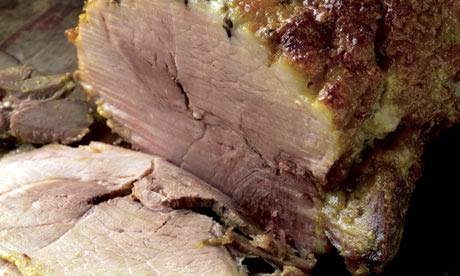
Easter glazed ham
By Birgitta
If this is going to form the centrepiece to your lunch on Easter Sunday, you need to start on it now. Buy the joint today and put it in the brine, and you'll be fine. Don't be put off by the long list of instructions: every stage is very simple and requires minimal intervention.
Hugh Fearnley-Whittingstall
 1 Picture
Ingredients
- For the cure:
- 1 half-leg free-range pork (4-5 kg), on or off the bone
- 2 kg salt
- 10 g saltpetre (optional, but it helps keep the ham pink)
- 1 litre good apple juice
- 1 litre strong cider
- 6 litres water
- 1 kg demerara sugar
- 1 kg dark muscovado sugar or black treacle
- 20-30 juniper berries
- 30 g black peppercorns, crushed
- 10 bay leaves, crushed
- 10 cloves
- To cook the ham:
- 1 large onion, peeled and chopped
- 2 large carrots, peeled and chopped
- 2 celery sticks, chopped
- 10 black peppercorns
- 3-4 bay leaves
- 5-6 sprigs fresh thyme
- 1 small bunch parsley stalks
- For the glaze:
- 1 generous tbsp English mustard
- 250 g light muscovado sugar
- 15-20 cloves
Details
Servings 8
Adapted from guardian.co.uk
Preparation
Step 1
Bring all the brine ingredients to a boil in a large pan, then leave to cool. Transfer to a large plastic container - if you don't have a brining tub, a new bucket or storage container is fine; the most important thing is that it's non-metallic. Chill to 3-4C. Put the joint - also chilled, ideally to almost freezing - in the tub and submerge completely, using a non-metallic weight to help you along. Cover and leave in the coolest place you can find for five days. One to three days before you want to cook your ham, remove the joint from the cure, rinse, pat dry, wrap in a cotton cloth and store in the fridge.
To cook the ham, place it in a large stockpot, cover with cold water and add the stock vegetables, peppercorns and herbs (tied in a bouquet). Bring the water to a boil, lower the heat, cover partially with a lid and simmer very gently for four to five hours. If, after an hour of simmering, the water tastes unpalatably salty, discard most of it (but not the stock veg) and top up with fresh boiling water - this will help to reduce the saltiness of the cooked ham. Remove the ham from the pot and allow to cool slightly.
Preheat the oven to 180C/350F/ gas mark 4. To make the glaze, put the mustard and sugar in a small bowl and mix to a thick, sludgy paste. Peel away the skin of the ham, leaving a smooth, even layer of fat over the meat. Place the ham in a large roasting tin, then with the point of a sharp knife score the fat in a diamond pattern, but not so deep as to cut right through to the meat. Evenly spread the glaze all over it, stud the ham with cloves and roast for an hour to an hour and a half, until the glaze becomes a dark golden-brown, bubbling crust.
Serve with creamy mash, buttery, peppery cabbage and roast carrots.
Review this recipe